Car engine: before setting off, which fluid levels could let you down
Hello, Nathan here. Before setting off, check the oil, coolant, brakes and windshield washer fluid with the engine cold, then check the fuel and AdBlue levels, depending on your vehicle. An unusual drop, a leak or a warning light calls for a diagnosis, not just a top-up. These checks take a few minutes and can prevent a small issue from turning into a breakdown. Is the car loaded? Remember to adjust the tire pressure too.
WHAT TO DO NOW
- Park the car on level ground, switch off the engine and let it cool down.
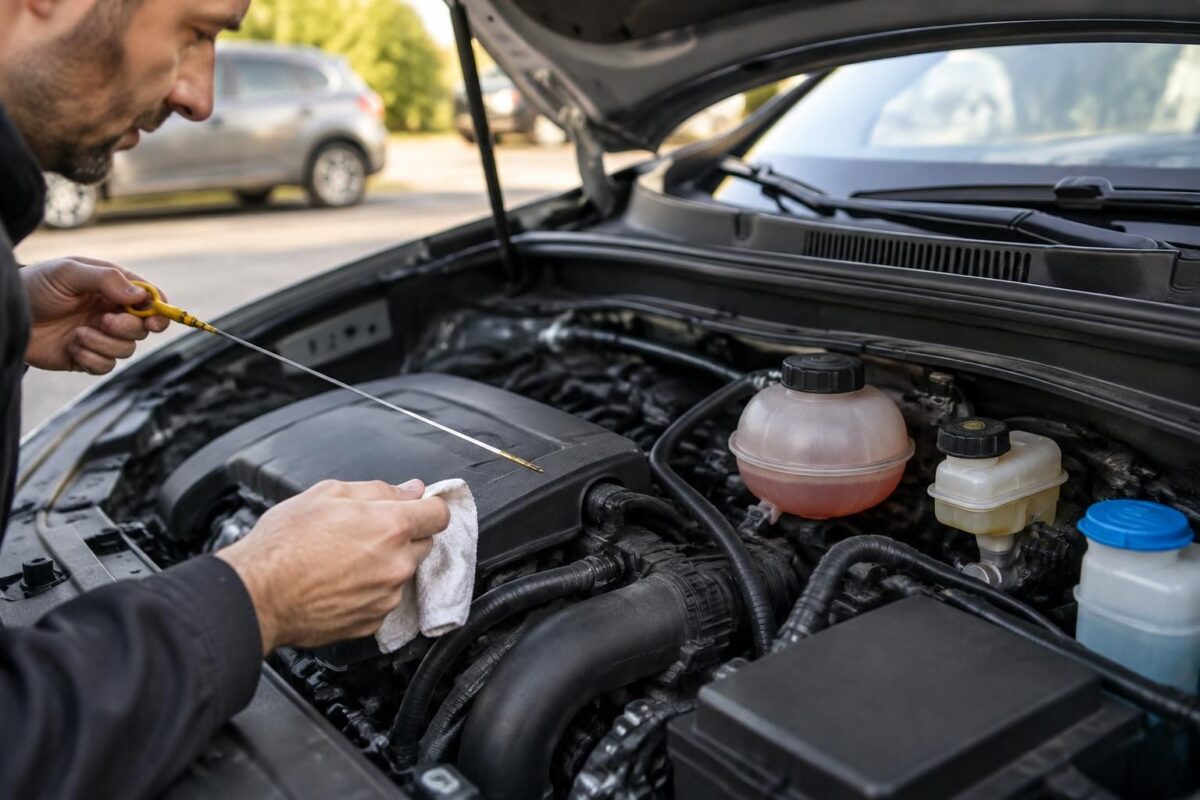
- Check the engine oil level using the dipstick or the indicator specified by the manufacturer.
- Check the coolant reservoir without ever opening its cap while hot.
- Check the brake fluid and top up the windshield washer fluid if necessary.
- Check the fuel level and, in applicable diesel vehicles, the AdBlue level.
Which fluid levels should you check before setting off by car?
Start with the fluids you can check easily. For the oil, follow the minimum and maximum marks on the dipstick or the procedure in the manual: on some models, the reading is shown on the display. If the level is low, add only the recommended oil, in small amounts. Extra oil is not a safety margin.
The coolant should be between the marks on the expansion tank. If the level often drops, have a professional find the cause rather than repeatedly topping it up. Brake fluid calls for the same caution: a drop can indicate a leak or worn brakes. Don’t just top up the reservoir.
Windshield washer fluid may seem less urgent, until spray covers the windshield. Fill it with a product suited to the season. Power steering fluid, meanwhile, is only relevant to vehicles with hydraulic power steering; many newer models use electric power steering.
Levels you may not be able to check yourself
Transmission oil and clutch fluid are not necessarily accessible through a simple cap under the hood. Depending on the model, checking them may require specific tools or a particular procedure. If you spot a leak or find it difficult to shift gears, have the car inspected before a long trip.
The AdBlue level matters for diesel vehicles that use it. Check the displayed range and allow for a reserve: ignoring the warning can prevent some vehicles from restarting once the tank is empty. For other things to watch, this reminder on checking fluid levels before setting off is a useful addition to your inspection.
| Level or item | Quick check | Warning sign not to ignore |
|---|---|---|
| Engine oil | Read the dipstick or indicator as directed in the manual | Level below minimum or repeated drop |
| Coolant | Check the marks on the reservoir with the engine cold | Frequent drop, leak or unusual smell |
| Brake fluid | Check the reservoir mark | Low level or spongy pedal |
| Windshield washer fluid | Fill with a product suited to the season | Empty reservoir or clogged nozzles |
| Fuel and AdBlue | Check the dashboard indicators | Not enough range for the planned trip |
Checking fluid levels before setting off: the 3-step method
- Step 1: Park on a level surface, apply the parking brake and switch off the engine. Wait for it to cool before opening the hood; check the oil according to the manufacturer’s instructions.
- Step 2: Check each reservoir or mark without mixing up the fluids. If you top anything up, use the appropriate fluid and never exceed the maximum level.
- Step 3: Look under the car and at the dashboard. A fresh stain, a persistent warning light or the smell of hot fluid calls for an inspection at a repair shop.
A common mistake is opening the coolant reservoir right after a drive to “take a quick look.” The system may still be pressurized and can spray boiling fluid; wait until it has cooled completely.
Low fluid level: simple top-up or trip to the repair shop?
Topping up may get you out of a bind if the level is slightly low and you know which product to use. But if the fluid level drops again, topping up won’t solve the problem. A leak, abnormal consumption or worn part should be diagnosed before the trip makes it worse.
If the oil level is just below the minimum, don’t set off without adding the correct oil and checking the dipstick again. If the oil pressure warning light stays on, stop the engine as soon as you can do so safely and ask for help.
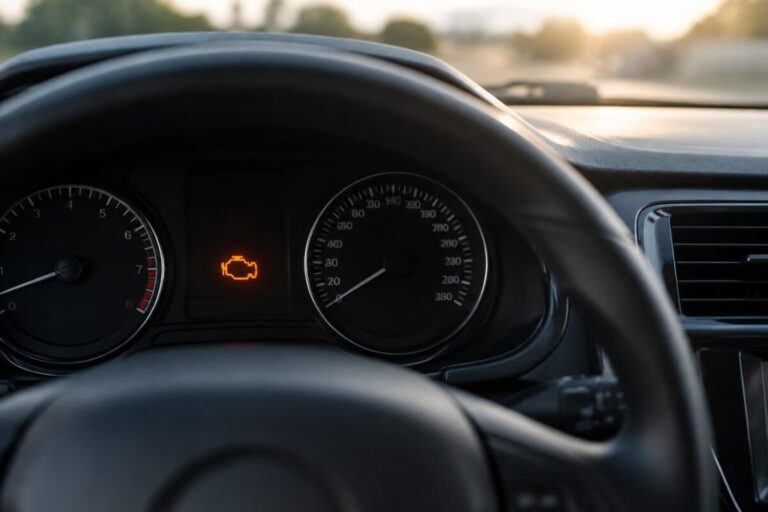
If the brake fluid is low, the pedal sinks abnormally or the car pulls to one side when braking, don’t drive. A professional inspection is preferable to an improvised top-up. An engine warning light or unusual noise also deserves attention: check these signs that make a long trip risky before deciding to set off.
To spot other mechanical symptoms, you can also read about the signs that could point to a costly repair. The best approach is to deal with a warning before it turns into a breakdown on the road.
Don’t let your tires and load affect your departure
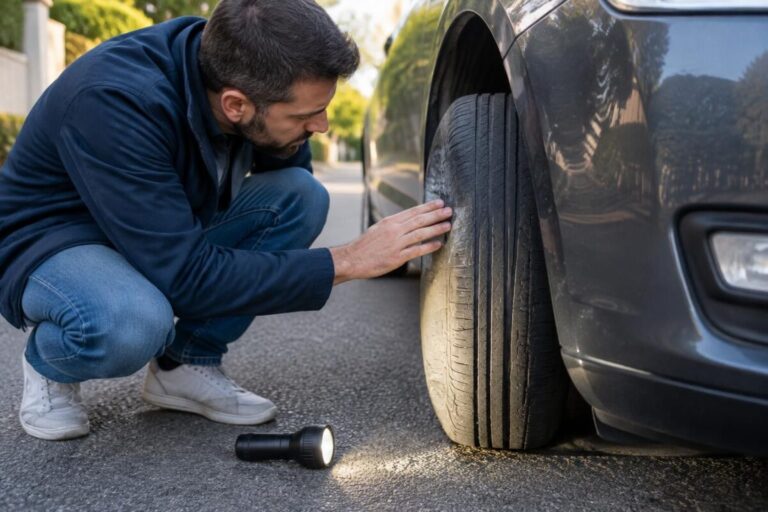
Fluid levels are only part of the check. Also check tire pressure, taking the load into account: the recommended pressures are often listed on the door label or in the manual. Inspect the sidewalls and tread; a bulge or cut needs prompt attention.
Place heavy luggage low down, against the back of the rear seat, and avoid loose objects in the cabin. If the car is full, correct tire pressure and a well-organized trunk matter just as much as having enough fuel.
Signs that should delay your departure
A red warning light, rising engine temperature, visible leak or smell of hot fluid won’t be fixed by driving slowly. The same goes if the car becomes difficult to start, a metallic noise appears or the brakes feel different. In these cases, getting a diagnosis is better than taking a chance on the distance.
For a routine check, note the mileage and monitor how the fluid levels change over the weeks. A one-off drop may have an explanation, but a repeated drop gives the repair shop useful information. Checking fluid levels before setting off is mainly about spotting this change in time.
How often should you check the fluids?
A monthly check is a sensible routine for accessible fluid levels, with an additional check before a long trip. The vehicle manual remains the reference, as procedures and intervals vary by model and engine. If you rarely use your car, also take a look before setting off after it has been sitting for several weeks.
Should you check fluid levels with the engine cold?
Yes, this is the safest method for coolant and often the most reliable way to check the oil. However, follow the procedure in your vehicle’s manual.
Can you drive with a low brake fluid level?
It’s best to avoid it. A drop can indicate a leak or worn brakes; have the system checked before setting off, and don’t just top it up.
Is power steering fluid present in all cars?
No. Cars with electric power steering generally don’t have power steering fluid. Check the manual before looking for a reservoir or adding a product.
Should I check the AdBlue before a long trip?
If your diesel vehicle uses AdBlue, check the displayed range and allow for a reserve. Use the recommended product and follow the manufacturer’s instructions.
Thank you for your interest; Nathan