Car engine: orange warning light at startup—should you be worried?
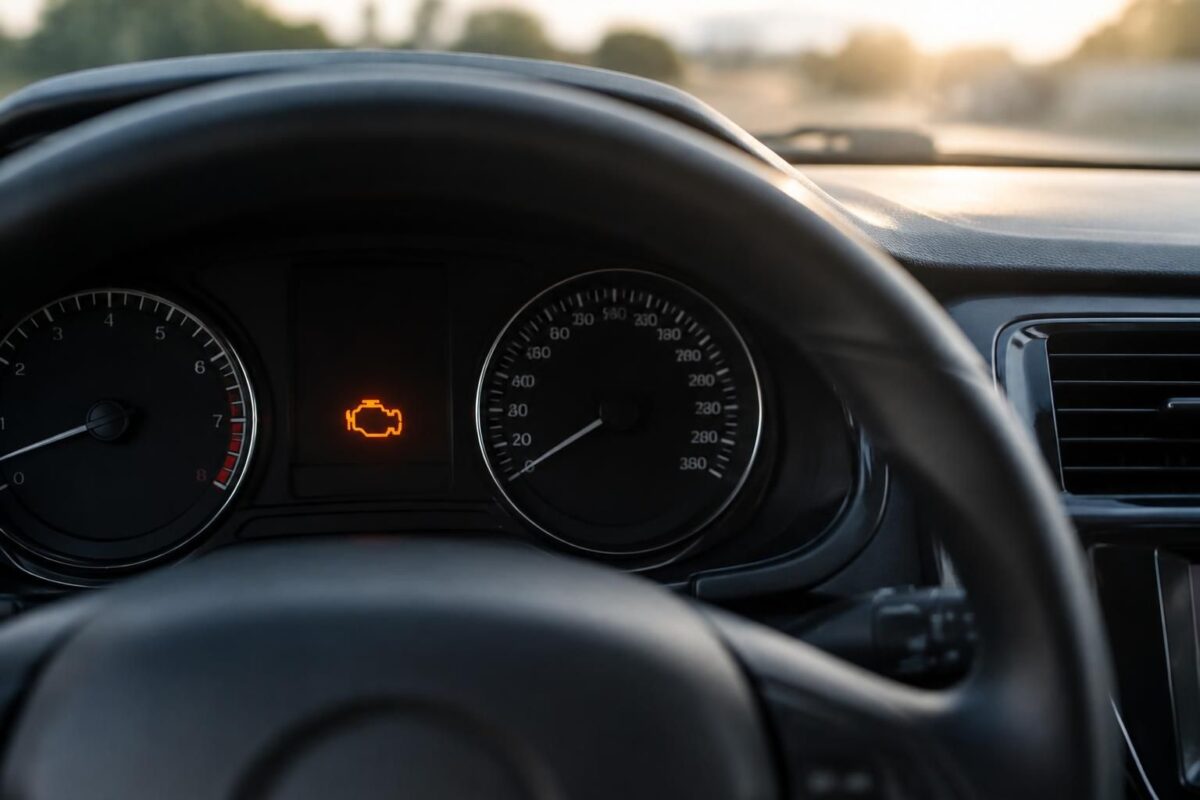
Hi, this is Nathan. If the orange engine warning light comes on when you turn the ignition on and then goes out after starting, this is generally the dashboard’s normal check. If it stays on while the engine is running, have the fault code read and adjust your driving to the symptoms. If it flashes, slow down and seek advice promptly; if a red oil or temperature warning light appears, stop the engine as soon as you can do so safely.
WHAT TO DO NOW
- Check whether the warning light goes out after starting or stays on.
- See whether it is steady or flashing, and look for any red warning lights.
- Listen to the engine: note any shaking, jerking, or loss of power.
- After refueling, check that the fuel cap is properly closed.
- Don’t clear the fault code before noting it down or having it diagnosed.
Orange engine warning light at startup: when is it normal?
When you turn the ignition on, the orange engine warning light may come on for a few seconds along with other indicator lights. This is a dashboard check: if the engine starts normally and the light goes out quickly, there is generally no need to worry.
The expected behavior varies depending on the car. If in doubt, consult the manufacturer’s manual: the diesel preheating indicator, often shaped like a coil, can be mistaken for the engine warning light.
Warning light goes out after starting: the usual scenario
The reassuring scenario is simple: the warning light comes on when you turn the ignition on, the engine starts, and then the light goes out and stays off. If there’s no noise, shaking, smoke, or loss of power when starting, the check probably went as expected.
If the light stays on or comes back while the engine is running, the control unit has recorded a fault. The symbol alone doesn’t reveal the problem: a loose fuel cap and a fault in the emissions control system can trigger the same warning.
Steady orange, flashing, or red warning light: how urgent is it?
| Situation | What it may indicate | Recommended action |
|---|---|---|
| Steady orange light while the engine is running | Stored fault, often related to the engine or emissions control system | If the car is driving normally, drive carefully and arrange a diagnosis within a few days, or within 1 to 2 weeks at the latest, depending on the symptoms. |
| Flashing orange light | Possible misfires, with a risk of damaging the catalytic converter | Slow down, avoid hard acceleration, and seek advice from a garage promptly, ideally within 24 hours. |
| Red oil or temperature warning light | Insufficient oil pressure or engine overheating | Pull over safely and switch off the engine. Don’t set off again until you’ve checked the situation or gotten help. |
A flashing warning light should not be treated like a steady one. Misfires can send unburned fuel into the catalytic converter and cause it to overheat. If the engine is shaking severely or losing a lot of power, stop as soon as possible without putting yourself in danger and contact roadside assistance.
To decide between driving carefully to a repair shop and stopping immediately, these tips on what to do when a warning light appears may help. If you’re unsure before a long journey, also read about the risks of driving with an engine warning light.
Engine warning light on at startup: possible causes
The cause could be an oxygen sensor, spark plugs or an ignition coil, the catalytic converter, an air sensor, or an EGR valve. In a diesel car used mainly in the city, a clogged particulate filter is another possibility. These are diagnostic leads, not parts to replace at random.
Two quick scenarios to help you respond without panicking
If the warning light appears after refueling, check the fuel cap and tighten it until it is properly closed. The warning light may take several trips to go out; if it stays on, have the fault code read.
If the warning light flashes and the engine shakes, avoid continuing to drive. Faulty spark plugs or an ignition coil can cause misfires, but only an inspection can confirm the cause.
A steady warning light with no symptoms may seem harmless, but the fact that you don’t notice a change while driving isn’t enough to rule out a fault. The checks in this guide to simple checks to do before panicking let you get started without taking the car apart.
Engine warning light diagnosis: a 3-step process
- Step 1: look for signs. Note whether the warning light is steady or flashing, when it appears, and whether the engine shakes, overheats, or lacks power. These details help guide the inspection.
- Step 2: read the fault code. A basic OBD2 reader often costs around €15 to €40, depending on the model. It displays a code, such as P0300 for detected misfires, but the code points to a possible cause: on its own, it doesn’t confirm which part is at fault.
- Step 3: have the fault confirmed. A garage can check the circuit, connectors, and readings before replacing a part. A professional diagnosis often costs a few dozen euros, depending on the repair shop and the car.
Avoid clearing the fault before recording the code: you could delete information that would be useful to the mechanic. Clearing the warning light doesn’t repair the car, and it may come back if the cause persists.
Can you keep driving with the orange warning light on?
If the warning light is steady, the engine is running normally, and no red warning light is on, a short, careful drive to a garage is often possible. Limit hard acceleration and watch for any change in how the car behaves; there is no safe distance that applies to every fault.
If the warning light is flashing, the car is vibrating severely, or it suddenly loses power, don’t continue your journey as if nothing is wrong. To assess the situation based on the symptoms, also see these guidelines on driving with an orange engine warning light.
Engine warning light at startup: useful answers
The orange engine warning light comes on and then goes out at startup: is that normal?
Yes, this is generally the indicator check that takes place when you turn the ignition on. If it goes out after starting and doesn’t come back on, this is normal behavior. The vehicle’s manual remains the reference.
Can I drive with a steady orange engine warning light?
If the engine is running normally and no red warning light is on, a short, careful drive to a garage is often possible. Have the code read promptly and avoid hard acceleration.
What should I do if the engine warning light flashes?
Slow down, avoid acceleration, and consult a professional promptly. If the engine is shaking severely or losing a lot of power, stop safely and ask for help.
Can an OBD2 reader identify the fault?
It can display a code that helps guide the diagnosis, but it doesn’t always identify the faulty part. Further checks may be needed before any repairs.
Thanks for your interest; Nathan