Tires: where to find the right pressure without making a silly mistake
Hi, Nathan here. The correct pressure is shown on the door-jamb sticker, inside the fuel-filler flap, or in the vehicle manual: don’t look for it on the tire sidewall. Tire pressure depends on the model, tire size, and vehicle load. To get an accurate reading, check them when cold and follow the manufacturer’s figures. A monthly check is often enough to avoid a mistake that can end up affecting handling and tire wear.
WHAT TO DO NOW
- Open the driver’s door and look for the tire pressure sticker.
- If it isn’t there, check the fuel-filler flap and then the vehicle manual.
- Find the figure that matches your load and tires.
- Check all four tires when cold using a reliable pressure gauge.
- Check the spare tire if your vehicle has one.
Where to find the correct tire pressure
The sticker is most often on the driver’s door frame. Depending on the model, it may also be inside the fuel-filler flap. If you can’t find it, the vehicle manual lists the recommended figures.
The chart may show several settings: normal driving, a loaded vehicle, or sometimes different tire sizes. Choose the row that matches your situation. A typical pressure may be around 2.2 to 2.5 bar, depending on the vehicle, but this range never replaces the manufacturer’s specifications.
Don’t treat the number on the tire sidewall as an inflation instruction. It indicates a limit for the tire, not the pressure suited to your car. To understand why incorrect pressure can also be felt at the steering wheel, see these details on the link between tires and heavy steering.
Cold tire pressure: the right time to check
A cold pressure reading is taken before driving for a long time, or after the vehicle has been parked for about two hours. As you drive, the tires heat up and their pressure naturally increases. A reading taken after a trip may therefore be higher than the pressure of a cold tire.
If you check a hot tire, don’t let air out to bring it down to the specified cold pressure. Wait for it to cool and check it again. If you absolutely have to inflate it before setting off, follow the manufacturer’s instructions and check it again when cold as soon as possible.
Pressure figures vary with load and tire size
A car carrying several passengers with a full trunk doesn’t always use the same setting as a nearly empty car. If the sticker lists a “full load” figure, use it before setting off. However, don’t add pressure at random: the vehicle’s load must be taken into account according to the displayed instructions.
Tire size matters too. If a different size has been fitted, check that it is approved and that the specified pressure matches that setup. The front and rear tires may require different pressures; don’t automatically set them to the same figure. You can also read these details on front and rear tire pressure.
How to check tire pressure accurately
- Step 1: Park the car on level ground with cold tires, then find the figures on the sticker or in the manual. Also check whether the chart gives separate figures for the front and rear.
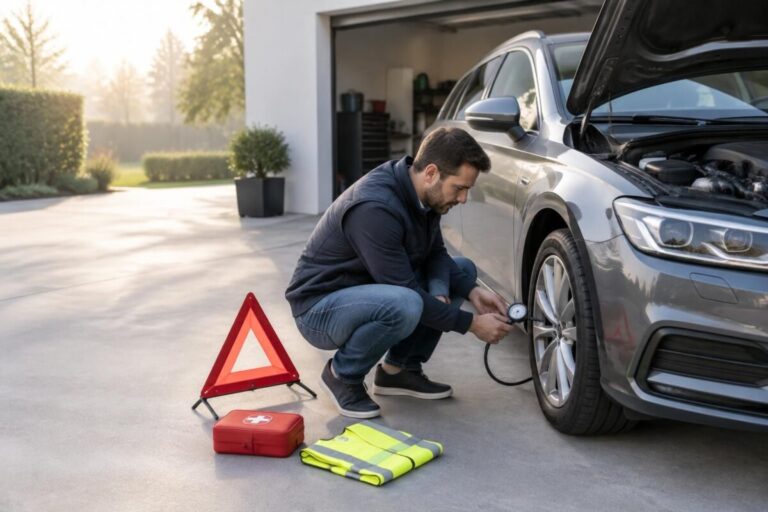
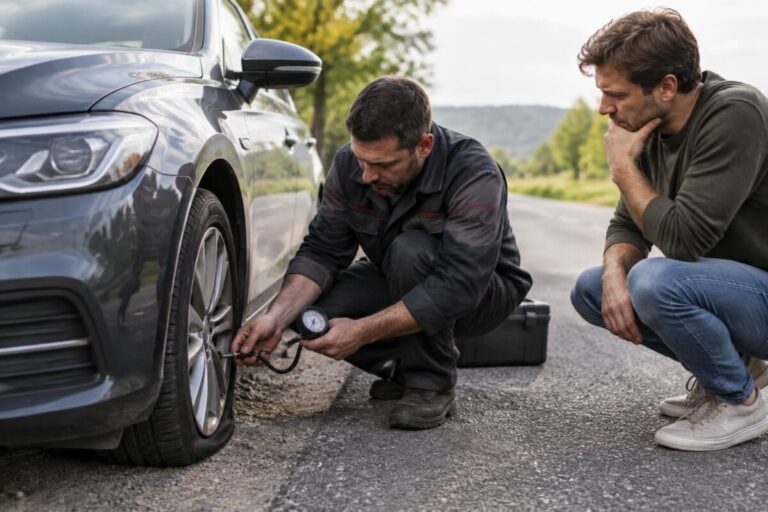
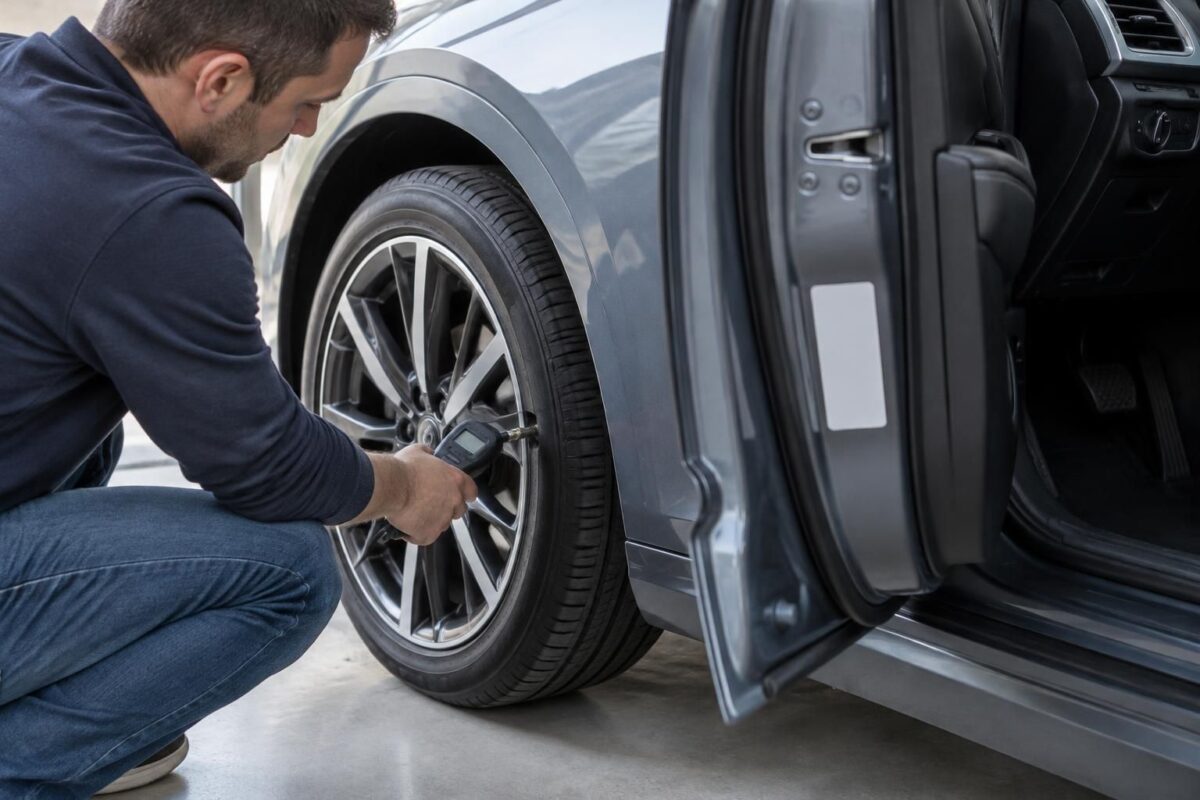
- Step 2: Remove the valve cap and connect a reliable pressure gauge straight onto the valve. Add air in short bursts, then check the reading again.
- Step 3: Repeat the process on all four wheels and screw the caps back on. A small, continuous hiss at the connection usually means the nozzle isn’t properly seated.
A gas station air pump is handy in a pinch, but having your own pressure gauge lets you check your tires before setting off. Check the unit shown: a figure in PSI and one in bar are read differently.
Two common situations
If you’re going on vacation with a full trunk… use the “maximum load” figure if it appears on the sticker, paying attention to the front and rear pressures.
If you’ve just driven on the highway… don’t adjust the pressure based on a hot-tire reading. Check it the next day instead, before setting off again.
How often to check your tires
Check the pressure once a month and before a long trip. A tire can slowly lose air without a visible puncture, and a significant change in temperature can also affect the reading. Check the spare tire from time to time too: forgotten in the trunk, it may be unusable when you need it.
The TPMS warning light is useful for alerting you to certain pressure losses, but it doesn’t replace checking with a pressure gauge. A slow leak may go unnoticed for a while. Incorrect inflation also affects fuel consumption and tire wear, as explained in this overview of how tire pressure affects your car.
Quick reference for different situations
| Situation | What to do |
|---|---|
| Daily driving, light load | Choose the “normal use” figure on the sticker. |
| Loaded car or vacation trip | Use the figure specified for the maximum load. |
| Hot tire after a drive | Don’t let air out; check again when cold. |
| Pressure often drops in one tire | Have the tire, valve, and rim checked. |
Mistakes that throw off the reading
Judging by how the tire looks is a bad idea: a tire can look normal while still being underinflated. Another common mistake is checking only the front tires. Differences between the axles are sometimes specified by the manufacturer and affect how the car handles.
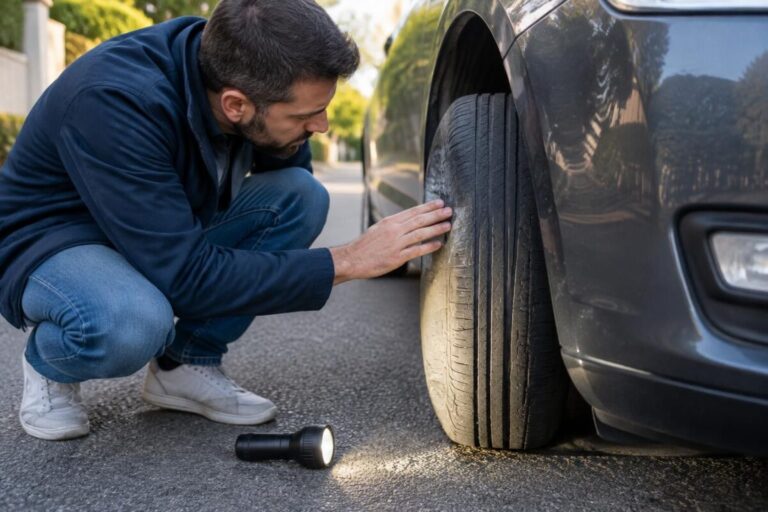
If a tire loses air quickly, don’t just keep inflating it. A nail, damaged valve, or damaged rim could be causing the leak. Have the wheel checked, especially if the car pulls to one side or the steering wheel feels unusually heavy.
Frequently asked questions about tire pressure
Where can I find the recommended pressure for my car?
First, check the sticker on the driver’s door frame. Depending on the model, it may be inside the fuel-filler flap; the vehicle manual also lists the manufacturer’s specifications.
Can I rely on the number printed on the tire sidewall?
No. The number on the sidewall doesn’t give the recommended pressure for your car. Use the vehicle’s sticker or manual.
When should I check the pressure when the tires are cold?
Check before driving for a long time or after the car has been parked for about two hours. Heat generated while driving raises the pressure and can distort the reading.
Does the TPMS warning light replace a manual check?
No. It can warn you of a significant loss, but regularly checking all four tires with a reliable pressure gauge is still necessary.
Thanks for your interest; Nathan