Tires: 6 signs you shouldn’t take the highway
Hello, this is Nathan.
If a tire has a bulge, a deep cut, severe wear, or is losing pressure, don’t take it on the highway until it has been inspected or replaced. At high speeds, a defect can worsen and make the car difficult to control. A quick check of all four wheels can help spot the warning signs that really matter. If in doubt, stop somewhere safe and ask a professional for advice.
Tires: 6 signs that mean you shouldn’t take the highway
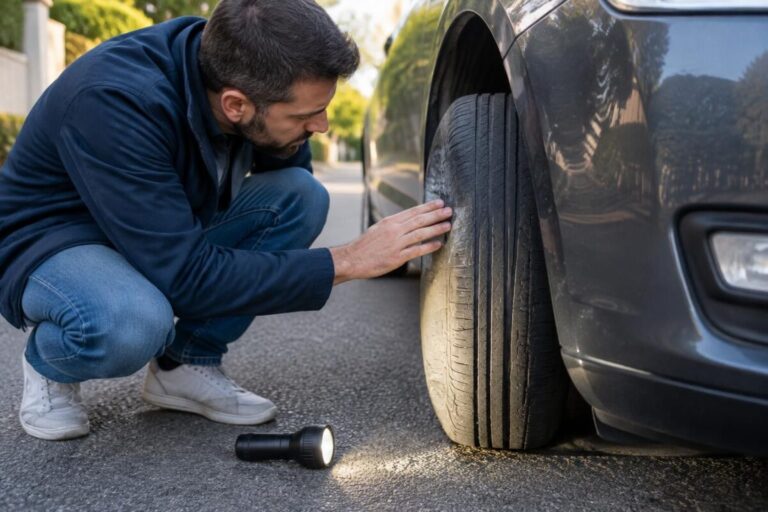
A tire can look fine from a distance and still hide a serious defect. Before a long trip, check all four wheels, including the inner sidewalls where possible: a few minutes of tire inspection can help you avoid setting off with an obvious problem.
Mileage alone isn’t enough to judge their condition. Age, pressure, tread depth, and visible damage matter too. Here are six signs that mean you should delay your departure or have the car checked.
WHAT TO DO NOW
- Inspect each tire all the way around, including the sidewalls.
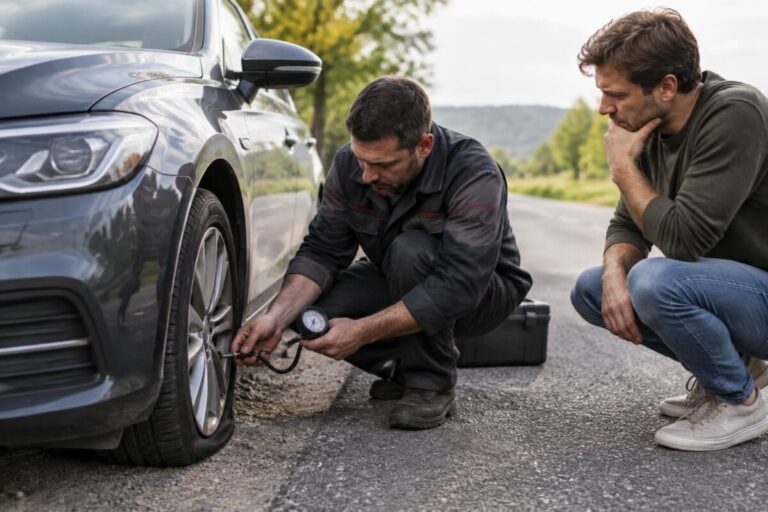
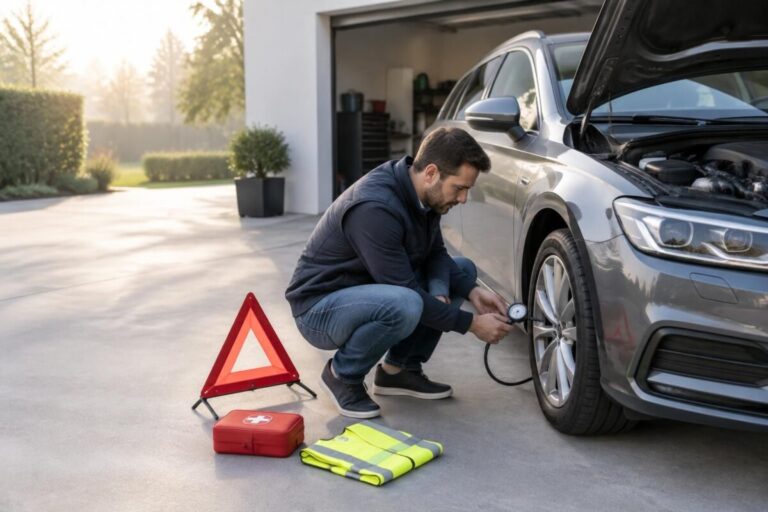
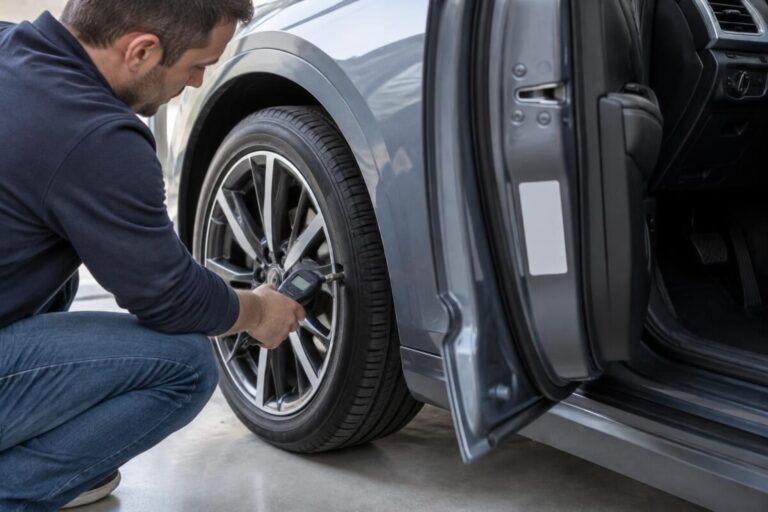
- Check the tire pressure when cold and compare it with the values specified by the manufacturer.
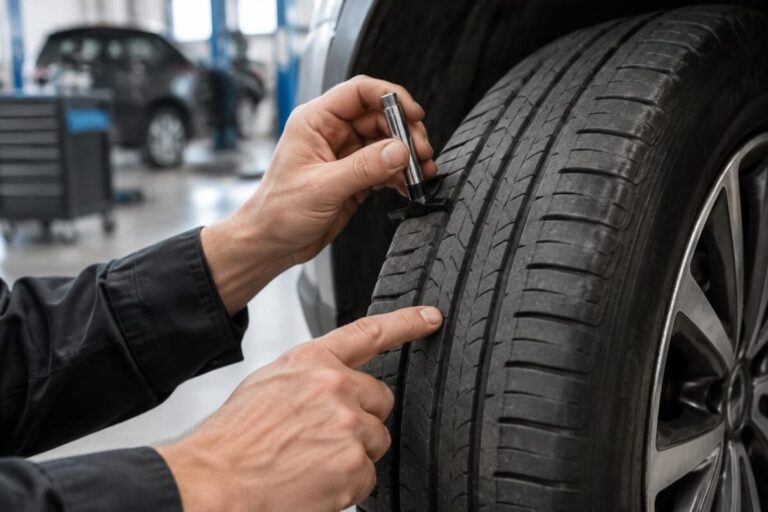
- Measure the tread depth with a gauge, especially before driving in the rain.
- Look out for steering wheel vibrations, unusual noises, and the car pulling to one side.
- If you find a bulge, a deep cut, or rapid pressure loss, don’t take the highway; have the vehicle inspected.
Six signs of dangerous tires before a highway trip
1. A bulge in a tire or damaged sidewalls
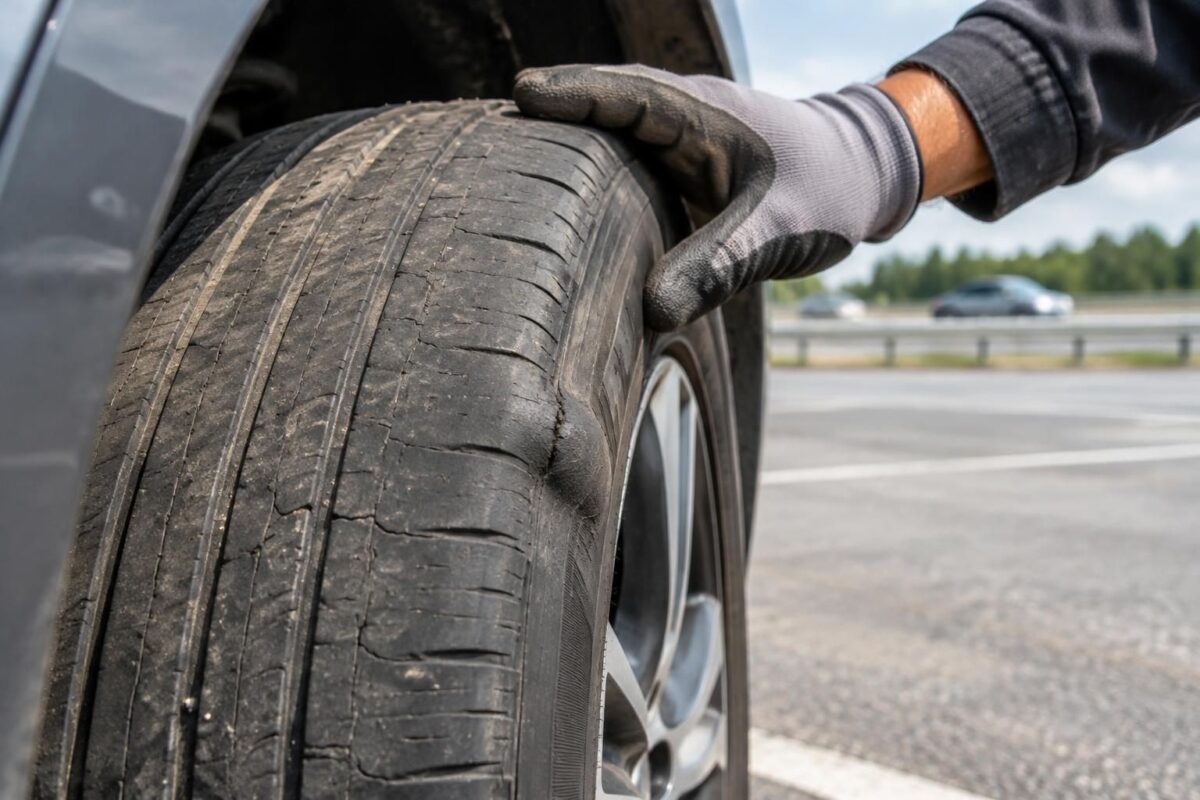
A bulge on the sidewall, a tear, or a deep cut may indicate a weakened structure. A bulge in a tire is particularly concerning: the tire could fail, especially as it heats up at sustained speeds.
Don’t try to repair a deformation yourself. If you spot one, avoid driving and ask a professional how to get to a repair shop safely.
2. Worn tires or tread depth that’s too low
In France, the legal limit is 1.6 mm on the tread. But waiting until that point isn’t ideal: once the tread is around 3 mm, it’s wise to consider replacing the tire, especially if you often drive in the rain. Shallow grooves are less effective at clearing water and reduce wet-road grip.
A tread depth gauge gives you an accurate measurement. If you don’t have one, a 2-euro coin can provide a rough indication: if its gold-colored rim remains fully visible in the groove, the tread depth is probably below 3 mm. Also check the built-in wear indicators: if they’re level with the tread, the tire has reached its legal limit.
3. Tire pressure that’s too low or too high
Incorrect pressure changes how the tire contacts the road. An underinflated tire can heat up more and wear faster; an overinflated tire can reduce the contact patch. In both cases, the car’s handling may change, especially with a loaded trunk.
Check the pressure when the tires are cold and follow the values on the vehicle’s label or in the manual. For help choosing the right setting, see these practical tips for inflating your tires.
4. Steering wheel vibrations or the car pulling to one side
Steering wheel vibrations at certain speeds may be caused by a deformed tire, an unbalanced wheel, or another mechanical issue. If the car pulls to one side, an underinflated tire or an alignment problem could also be to blame.
Don’t use the highway to “see if it goes away.” If the symptom is new or pronounced, have the car checked before setting off. This guide explains how to check for possible causes of tire problems.
5. Uneven wear on one edge
Uneven wear, more pronounced on the inside or outside, may point to an alignment, wheel geometry, or suspension problem. Fitting a new tire without investigating the cause could lead to the same problem happening again.
Have everything checked before a long trip, especially if the wear is severe or the car seems less stable. Examples of signs to look for are shown in this guide to abnormal tire wear.
6. An old, cracked, or visibly damaged tire
Rubber ages even when the car is driven very little. Cracks, hardened rubber, or visible damage should prompt an inspection, even if the tread still looks deep.
The last four digits of the DOT marking indicate the week and year of manufacture. A professional inspection is recommended after about five years; depending on the condition and usage, replacement may be necessary between five and eight years. Ten years is generally considered the maximum age, but that doesn’t guarantee a tire will remain safe until then.
| Sign observed | Possible risk | What to do before the highway |
|---|---|---|
| Bulge or deep cut | Tire failure | Don’t set off; have it inspected or replaced |
| Tread depth close to 3 mm or less | Reduced water dispersal | Measure the tread depth and consider replacement |
| Incorrect pressure | Overheating or altered road contact | Adjust the pressure when cold according to the recommendations |
| Vibrations or the car pulling to one side | Tire, wheel, or alignment needs checking | Have it diagnosed before a long trip |
| Wear concentrated on one edge | Faulty adjustment or mechanical component | Have the alignment checked |
| Cracks or an old tire | Rubber may have deteriorated | Ask a professional for advice |
Tire check before the highway: a 3-step procedure
Step 1: park the car on a flat surface and inspect all four tires. Look for a bulge, crack, cut, embedded object, or significantly different wear from one wheel to another.
Step 2: check the pressure when cold, then measure the tread depth. Remember to adjust the pressure for the load if the manufacturer specifies different values for a loaded car.
Step 3: set off only if there’s no concerning damage or unusual symptom. If in doubt, postpone the trip and have the vehicle checked: highway safety starts before the on-ramp.
Two real-life situations: should you delay your departure?
If you see a bulge on the sidewall or the pressure is dropping quickly, don’t take the highway. An improvised repair is no substitute for a professional inspection, and a temporary spare tire must be used within its limits and according to the vehicle’s instructions.
If the tires are slightly underinflated but there’s no visible damage, inflate them when cold according to the manufacturer’s recommendations, then check that they hold their pressure. If a warning light stays on or the car vibrates, have the cause checked before setting off again.
Why these checks matter for highway safety
At high speeds, tires are subject to significant forces and can heat up, especially when the car is loaded. Worn or damaged tires reduce the safety margin when braking and on wet roads. The best decision isn’t always to replace all four tires: it’s to identify the defect and address its cause before setting off.
To round out these checks, also see our advice on the consequences of neglecting your tires. One small detail that’s often overlooked: after inflating the tires, put the valve caps back on and check the pressure again a few days later.
Common questions about tires before taking the highway
Can you drive on the highway with tires at 2 mm?
That’s above the French legal limit of 1.6 mm, but shallow tread is less effective at clearing water. Before driving in the rain or with a loaded car, have the tires checked and consider replacing them.
Can a bulge in a tire be repaired?
A bulge on the sidewall may indicate structural damage. Don’t treat it like a simple puncture repaired with a plug: ask a professional for advice promptly and avoid the highway.
When should you check tire pressure before a long trip?
Ideally, check it when the tires are cold, before setting off, and adjust it to the manufacturer’s recommended values. Check the recommendations for a loaded car if they’re provided.
How old can a tire be before it should be checked?
A thorough professional inspection is recommended from around five years onward. The decision to replace a tire depends on its actual condition, any cracks, and the conditions in which it’s used; ten years is generally considered the maximum age.
Thanks for your interest; Nathan