Car safety: low tire pressure and longer braking distances pose a real risk
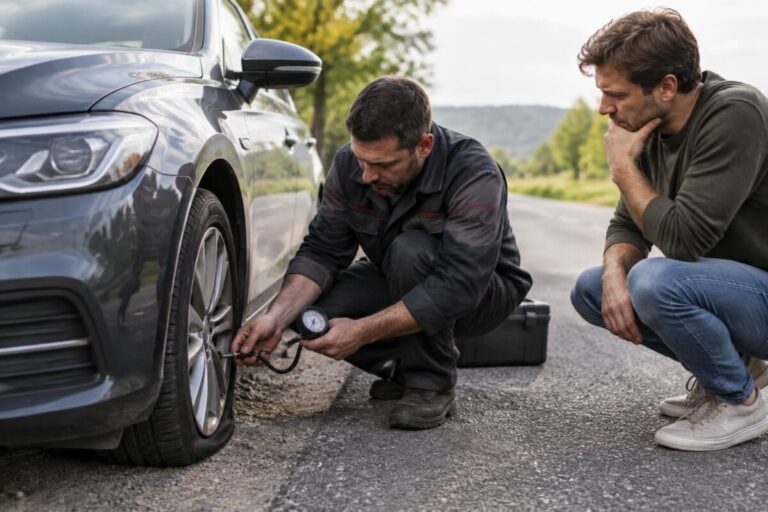
Hello, Nathan here. Low tire pressure can make braking less effective and increase stopping distance, especially on wet roads: check your tires when cold and inflate them to the manufacturer’s recommended values. A few tenths of a bar less won’t always have the same effect, but it can reduce tire grip and make emergency braking more difficult. The right habit is simple: check regularly, without relying on how the tire looks. It’s a quick step that really matters for car safety.
WHAT TO DO NOW
- Check your tire pressure once a month and before a long trip.
- Measure it when the tires are cold, before driving or after the car has been parked for several hours.
- Check the recommended values on the vehicle’s label or in the owner’s manual.
- Adjust the inflation pressure for the load if the manufacturer specifies a different value.
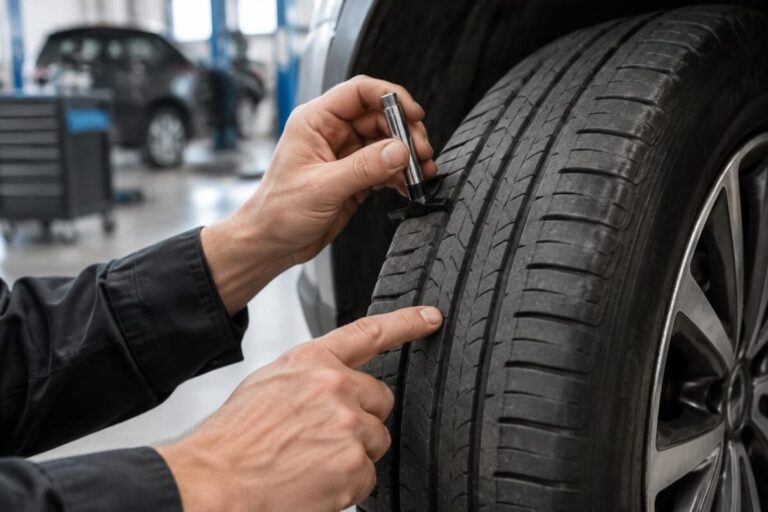
- Inspect the tires too: cuts, bulges, or unusual wear warrant a prompt check.
Low tire pressure: why braking distance can increase
An underinflated tire deforms more while driving. It heats up more and responds less precisely to changes in direction and braking inputs. The car may then feel less stable, with a less responsive feel when you press the brake pedal.
Braking distance also depends on speed, tire condition, the road surface, the weather, and the vehicle. On wet roads, incorrect tire pressure can reduce the available grip when you need it most. Longer braking distances are therefore not inevitable, but the risk increases when several unfavorable factors combine.
A tire pressure warning light is no substitute for checking with a pressure gauge. To spot other signs to look out for before a trip, also see these signs that mean you shouldn’t take the highway.
Underinflated or overinflated tires: different effects
With low pressure, the tire shoulders can wear faster and the tire casing can heat up more. Conversely, an overinflated tire can be less comfortable and may show more pronounced wear in the center. In both cases, road handling can be affected.
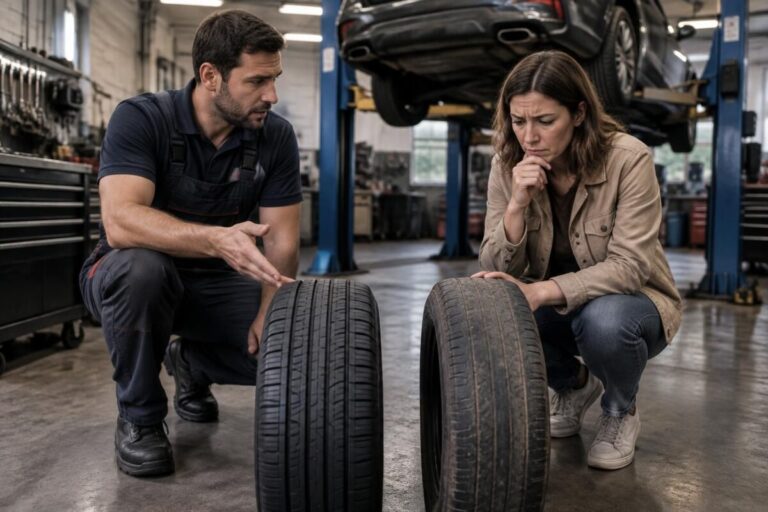
Don’t rely only on how the tire looks: moderate underinflation can sometimes be difficult to see with the naked eye. Checking the tires with a pressure gauge is more reliable, especially before setting off with a heavy load.
| Situation | Possible effect | Useful step |
|---|---|---|
| Pressure too low | Increased deformation, heat buildup, and less precise response | Inflate to the manufacturer’s recommended value and check for a leak if the pressure drops again |
| Pressure too high | Reduced comfort and potentially more wear in the center | Adjust when cold according to the vehicle label |
| Wet road | Reduced available grip, more challenging braking | Slow down and increase following distances |
| Loaded car | Pressure requirements vary by model | Follow the manufacturer’s recommended “fully loaded” pressure |
Checking your tires: a three-step method
Regular checks are easy to fit into your car maintenance routine. They help you avoid discovering a problem when you’re about to set off and make it easier to spot repeated pressure loss.
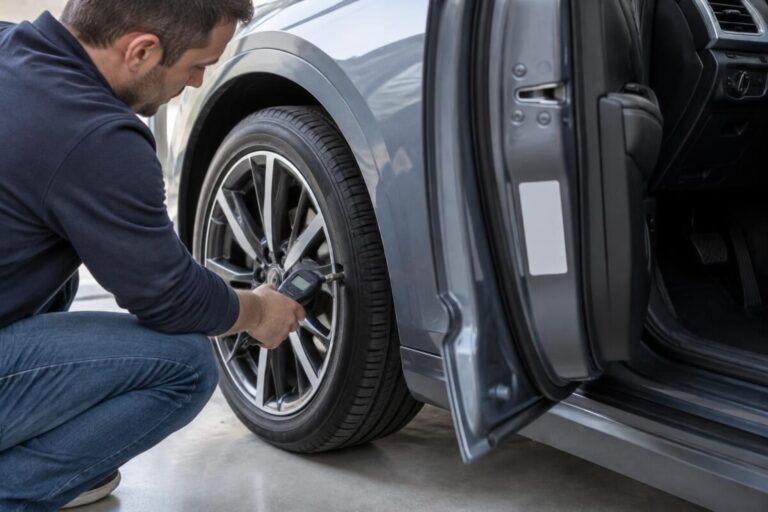
- Step 1: park the car on a flat surface and check the tires when cold. Find the recommended pressure on the door jamb, fuel filler flap, or in the owner’s manual.
- Step 2: measure each tire with a pressure gauge, including the spare if your vehicle has one. Compare the readings with those specified for the day’s load.
- Step 3: adjust the pressure, then check the condition of the tread and sidewalls. If a tire loses air again, have it checked for a puncture or a faulty valve.
Don’t let air out of a hot tire to bring it down to the specified cold pressure: the reading would be affected by the heat. Wait for it to cool, then check it under the right conditions.
Two situations where the right step changes
If you’re setting off with a heavy load: follow the manufacturer’s “fully loaded” pressure recommendation. A pressure setting for a small car may not be right for a vehicle carrying passengers and luggage.
If the pressure drops again: don’t just keep inflating the tire repeatedly. A slow puncture or faulty valve may be the cause; have the tire checked before a long trip.
Outside temperature can also affect the reading. In very cold weather, check your tires and adjust them according to the vehicle’s instructions, rather than applying a universal correction.
Rain, highways, and low tire pressure: when the risk increases
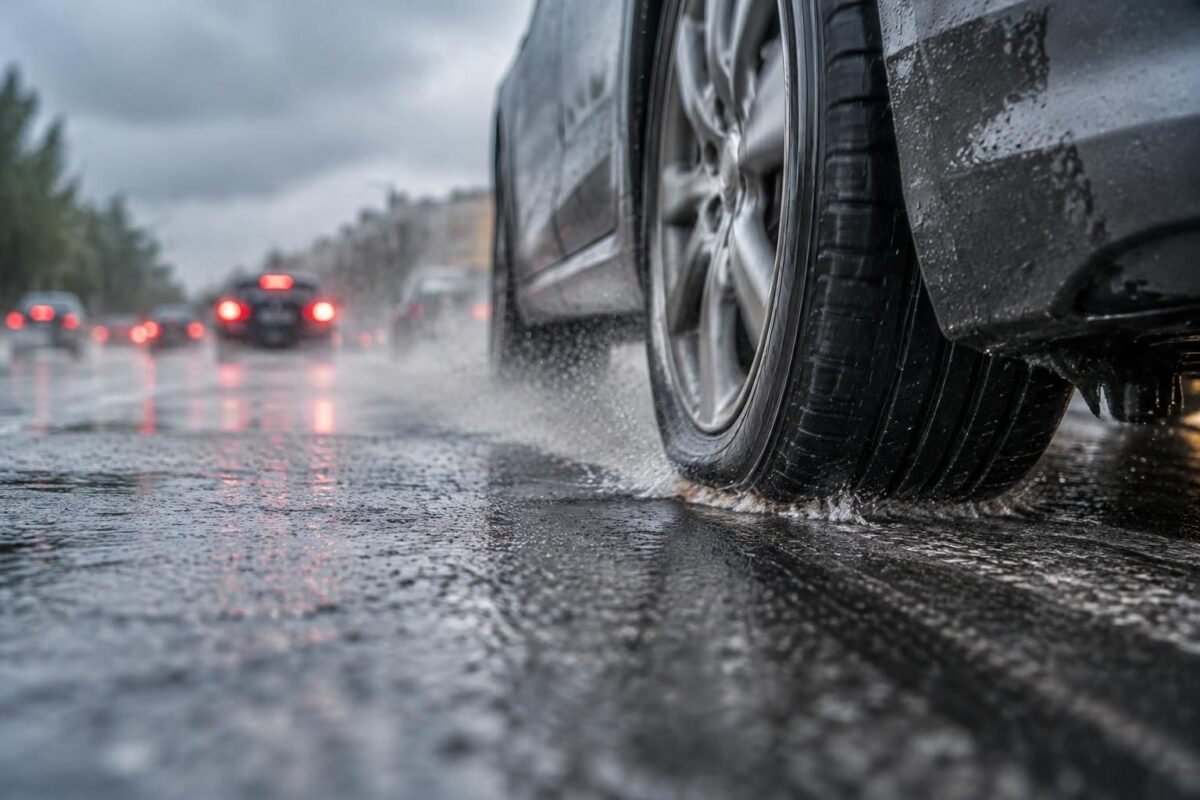
On wet roads, tires need to disperse water while maintaining enough grip. Incorrect tire pressure, high speed, and worn tread can reduce that margin and make the car’s responses less predictable.
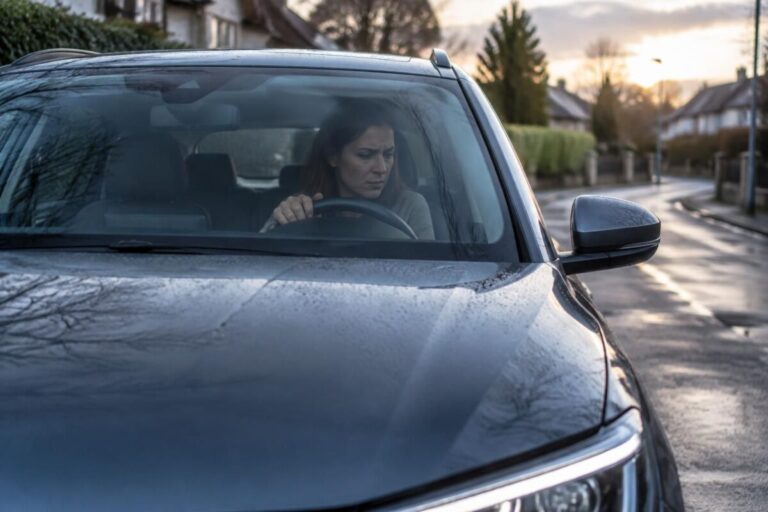
If the car pulls to one side, vibrates, or responds differently when braking, stop in a safe place as soon as possible. These signs don’t always point to a tire pressure problem, but they do warrant a check. To better understand the combined effects of rain and underinflation, read these tips on the bad combination of rain and underinflated tires.
A quick check can also prevent unnecessary worry: here are three simple checks to do before you panic. If a warning appears on the dashboard, remember that it signals an issue to investigate, but doesn’t always identify its exact cause.
Useful questions about underinflated tires and braking
Does low tire pressure always increase braking distance?
Not in the same way under all conditions. It can reduce stability and available grip, making braking less effective, especially if the road is wet or the tires are worn.
How often should you check your tire pressure?
Check it about once a month, before a long trip, and after a significant change in load. Measure the tires when cold and follow the manufacturer’s recommended values.
Can you drive with a slightly underinflated tire?
Avoid continuing your trip without checking and correcting the pressure. If the tire deflates quickly, is deformed, or triggers a persistent warning, stop in a safe place and have it checked.
Is the recommended pressure printed on the tire?
No. The sidewall generally indicates the maximum pressure for the tire, not the recommended operating pressure for your car. Check the vehicle label or owner’s manual.
Thanks for your interest; Nathan