Car Repairs: 10 Common Costs No One Anticipates
Hi, this is Nathan. The costs most often overlooked are diagnostics, towing, electrical faults, tires, brakes, the timing belt, the exhaust, the clutch, and a replacement vehicle: compare quotes and keep a dedicated reserve to cover them. In 2026, average annual maintenance is around €1,400, but an unexpected repair can quickly drive up the bill. The amounts below are ballpark figures and vary depending on the model, region, and situation. Spotting the first signs and acting early often helps prevent a small repair from turning into a major bill.
WHAT TO DO NOW
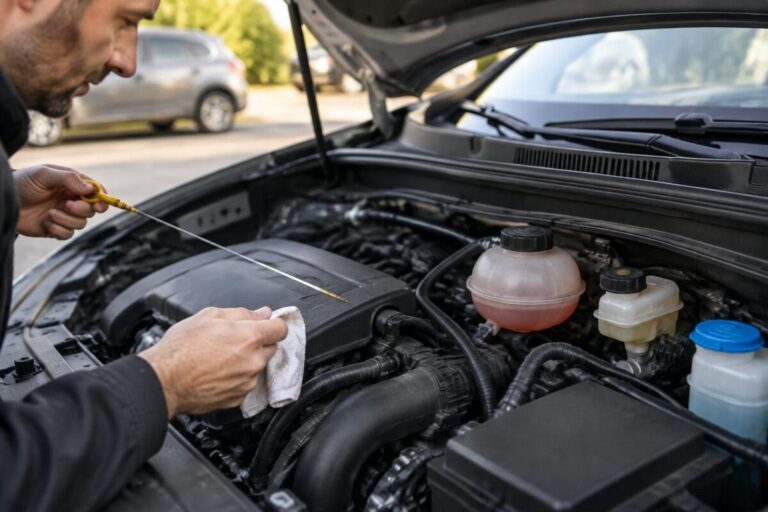
- Check the oil, coolant, and brake fluid once a month.
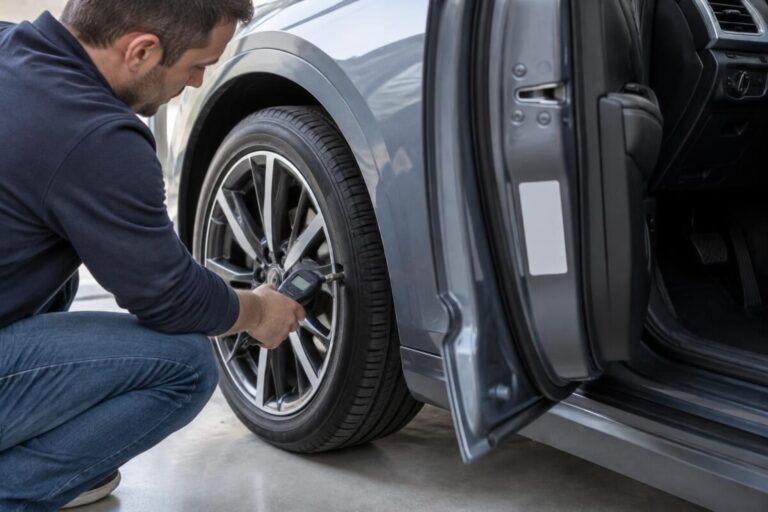
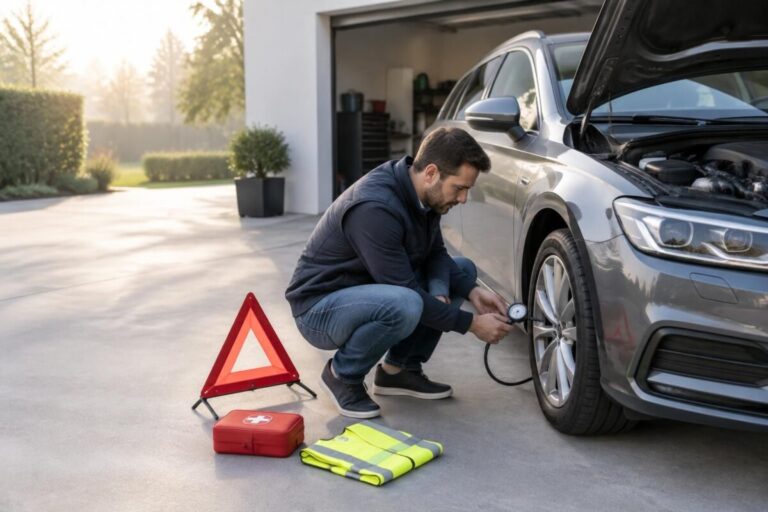
- Check tire pressure and wear: underinflated tires wear out faster and increase fuel consumption.
- Note any unusual noises, vibrations, or smells, then describe them clearly to the garage.
- Ask for an itemized quote before work begins: diagnostics, parts, labor, and additional fees.
- Set aside a reserve for unexpected repairs, even a modest one, and check your insurance terms.
The 10 car repair costs that catch people most by surprise
A breakdown does not always involve just the faulty part. Diagnostics, consumables, transportation, or having the vehicle out of service can also show up on the bill.
| Common cost | Ballpark figure | What can affect the price |
|---|---|---|
| 1. Vehicle diagnostics | About €60 to €120 | Time spent troubleshooting and electronic system complexity |
| 2. Towing costs | About €100 to €300, sometimes more | Distance, time, and location of the breakdown |
| 3. Battery replacement | About €120 to €400 | Battery type and any required programming |
| 4. Alternator failure | About €400 to €1,000 | Access to the part and vehicle model |
| 5. Tire repairs | About €25 to €250 | Whether a repair is possible or one or more tires need replacing |
| 6. Brake pad replacement | About €90 to €180 for the front | Parts, labor, and the condition of the discs |
| 7. Timing belt replacement | About €450 to €750 | Labor time and parts replaced at the same time |
| 8. Exhaust system repair | About €100 to €1,000 | Whether it is a simple leak or the replacement of an expensive component |
| 9. Clutch replacement | About €500 to €1,600 | Time required and associated parts |
| 10. Replacement vehicle | About €30 to €80 per day | Time the vehicle is out of service, insurance, and contract terms |
These ranges are indicative and vary depending on the model and situation. As a guide, garage hourly rates can range from about €60 to €125, with higher rates sometimes charged for specialized work or at a dealership.
Diagnostics and towing: two costs before repairs even begin
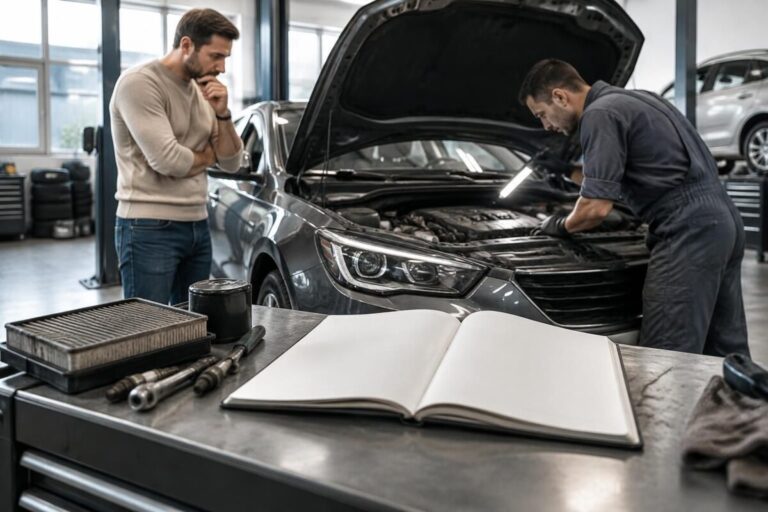
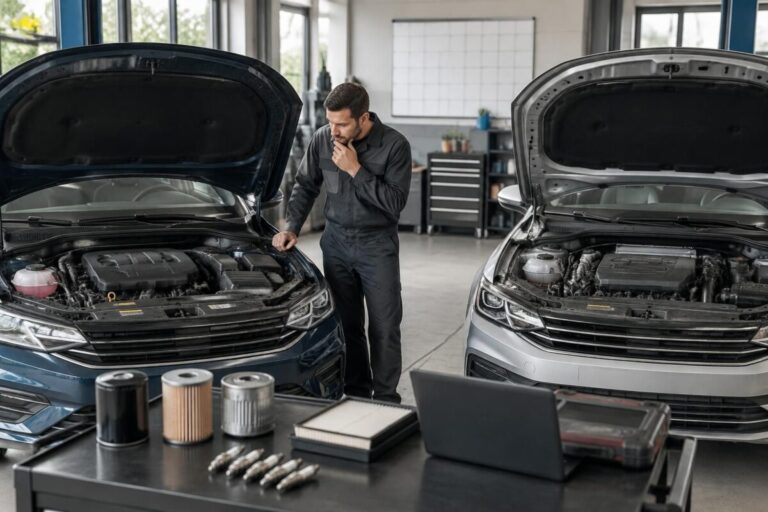
An engine warning light does not necessarily identify the part that needs replacing. The garage may charge to troubleshoot the problem before preparing a quote, especially if the fault is intermittent or related to the electronics.
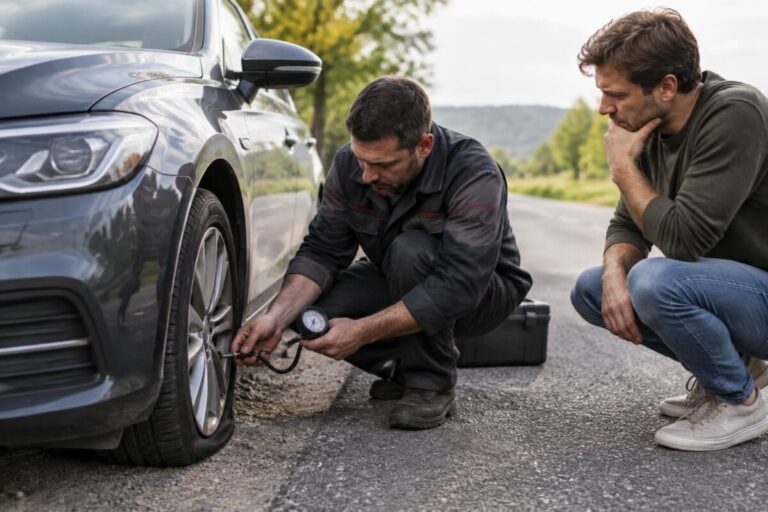
Towing often comes at the worst possible time: a breakdown on a fast road, a car that will not start at home, or a garage that is far away. If your vehicle is out of service, first check whether your insurance or roadside assistance covers breakdown services and from what distance.
Battery, alternator, and tires: problems that sometimes give warning
A slow start can be a sign of a failing battery, but it can also indicate an alternator problem. If the battery warning light stays on while the engine is running, avoid making multiple trips: a car that is no longer charging may eventually stall.
An underinflated tire or one with uneven wear can lead to other expenses. These tips on the costs associated with incorrect tire pressure and wear that damages other components can help you spot the problem before replacement is needed.
Brakes, timing belt, and exhaust: delaying repairs can cost more
Squealing when braking should be checked. Replacing the brake pads is often less expensive than waiting until the discs are damaged too. Likewise, sticking to the timing belt replacement schedule helps avoid the risk of engine failure, which can cost several thousand euros to repair.
A smell of exhaust fumes, a sudden noise, or a leak under the car may indicate an exhaust problem. For these repairs, ask the garage to specify which part is affected and why it needs to be replaced.
Clutch and additional costs: items to ask about
A slipping clutch or an unusually stiff pedal may signal that major work is needed. Replacing a clutch often takes several hours of labor, so ask for a quote that separates parts and labor.
Also check the less visible line items: fluid, filters, small parts, diagnostic fees already charged, or vehicle rental. A loaner car is not always free, even if the garage presents it as a convenient option.
How to keep unexpected garage costs down
Regular maintenance does not prevent every breakdown, but it can help you spot problems sooner. Check fluid levels every month, lights every six months, and tire condition regularly; also follow the recommendations in your owner’s manual, as service intervals depend on the vehicle.
A belt noise, steering wheel vibration, or burning smell is not something to ignore. Putting off maintenance for too long can complicate diagnosis and allow a problem to get worse.
If a red warning light comes on or you hear a metallic noise, pull over as soon as it is safe to do so and get advice. If the symptom is mild and consistent, note when it occurs and book an appointment soon rather than replacing a part at random.
A simple three-step process
- Step 1: Describe the symptom precisely: when it happens, the noise, warning light, and driving conditions. A video or photo may help the mechanic.
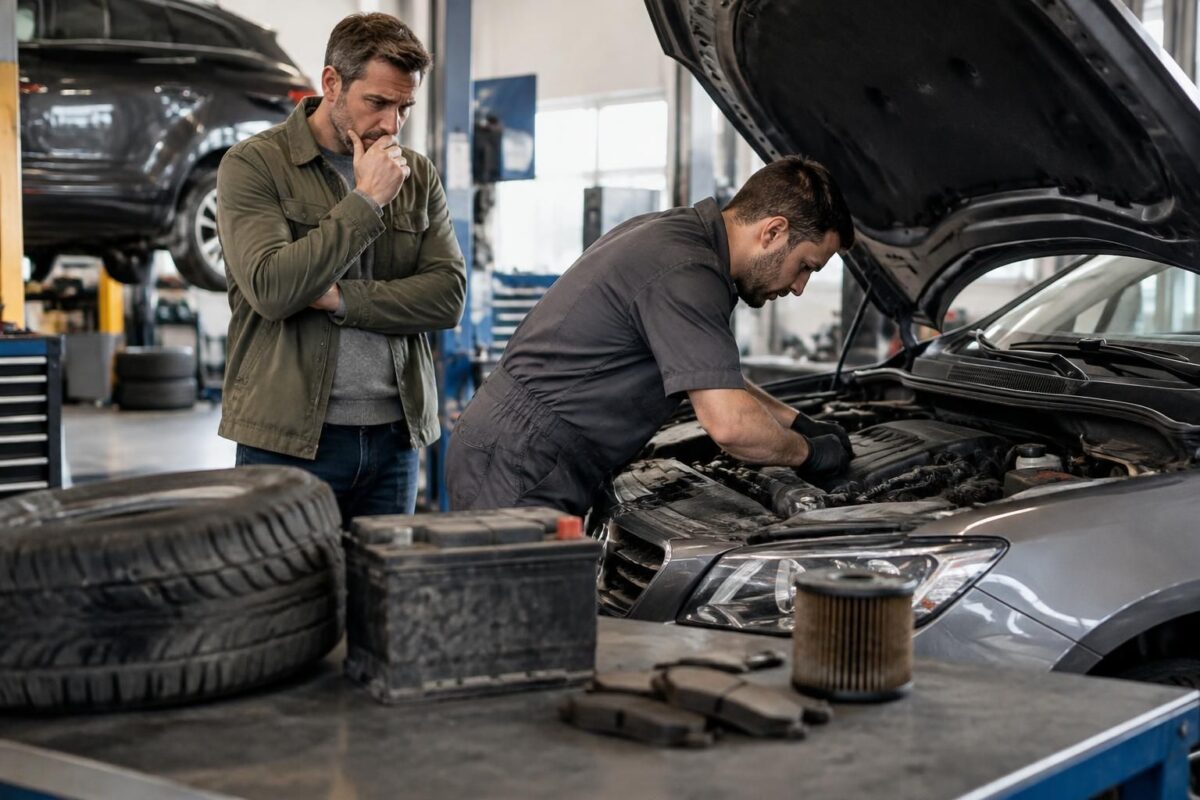
- Step 2: Ask for a written quote detailing the diagnostics, parts, labor time, and additional fees. For a major repair, compare quotes from several garages.
- Step 3: Approve the necessary work, ask for the replaced parts to be returned if possible, and keep the invoice with the service record.
A clear quote helps avoid surprises and makes it easier to compare options. You can also consider whether you need to go to the garage right away or whether a scheduled inspection is enough.
Understanding the bill and setting aside a car repair reserve
Car expenses are not limited to repairs: insurance, fuel, maintenance, and taxes also weigh on your budget. One estimate for 2026 puts average annual maintenance at around €1,400, while a poorly planned budget may leave about €800 in unexpected repairs to cover; these are guidelines, not guaranteed amounts for every driver.
Divide your expenses into fixed costs, routine maintenance, and unexpected costs. Even a small monthly reserve can cover a battery, a tire, or part of the towing costs without throwing your whole budget off balance.
Frequently asked questions about car repair costs
How much should I set aside for an unexpected repair?
There is no one-size-fits-all amount. A dedicated reserve, tailored to the age and model of your vehicle, can help cover diagnostics, towing, or replacement parts.
Can the garage charge for diagnostics if I refuse the repairs?
Yes, if troubleshooting was carried out and the price was stated or agreed to. Ask for the diagnostic cost to be specified before the work begins.
When should I stop driving and call for assistance?
Pull over safely if a red warning light comes on, there is a significant loss of power, smoke, a burning smell, or a pronounced metallic noise. If in doubt, have the car checked before driving again.
How do I compare two repair quotes?
Compare the itemized parts, labor time, diagnostics, consumables, and warranty terms. The total price alone does not show whether the services are equivalent.
Thank you for your interest; Nathan