Car safety: this noise at startup changes your journey
Hi, Nathan here.
A noise when starting the engine can indicate a weak battery, a worn belt, or an engine problem: listen to how long it lasts, check the warning lights, and stop if the sound is loud or persistent.
A brief click is not as urgent as a metallic knocking sound that continues after the engine starts. Before setting off, a few simple checks can help you avoid a car breakdown in the wrong place.
The right approach for your automotive safety: note when the noise occurs, then choose a safe route or request a mechanical inspection.
WHAT TO DO NOW
- Note whether the noise occurs when the engine is cold, when it is warm, or only when starting the engine.
- Check whether a dashboard warning light stays on, especially the oil or temperature light.
- Check the oil level on level ground, with the engine switched off for a few minutes.
- Listen to see whether the noise stops after a few seconds or increases with engine speed.
- If the noise is loud, metallic, or accompanied by vibrations, switch off the engine and call a professional.
Engine noise when starting: what the sound may reveal
A rapid clicking sound while the engine struggles to start may be caused by a weak battery or loose connections. A brief squeal may point to a belt or pulley, while regular knocking warrants a prompt inspection.
The sound alone is not enough to diagnose a car. Its duration, location, and any warning lights provide useful clues, but an inspection is still necessary if the problem returns.
Clicking, squealing, or knocking: useful differences
| Noise heard | Possible cause | Recommended action |
|---|---|---|
| Clicking and difficulty starting | Weak battery or worn starter motor | Avoid repeated attempts to start the engine and have the battery tested. |
| High-pitched squeal when starting | Worn, loose, or damp belt or pulley | Have the accessory drive inspected without putting your hands near the running engine. |
| Persistent metallic knocking | Insufficient lubrication or a worn engine component | Switch off the engine and seek professional advice. |
| Dull noise beneath the car | Loose exhaust or damaged mount | Have the exhaust system inspected using suitable equipment. |
A metallic noise that disappears almost immediately is not necessarily as serious as a knocking sound that gets louder. To better distinguish between the causes, see these common causes of noise when starting the engine.
Can you drive with a noise when starting the engine?
If it’s a brief click and the engine starts normally, have the battery tested soon and limit unnecessary trips if the noise keeps recurring. A discharged battery may eventually prevent the car from starting at all.
If it’s metallic knocking, a persistent noise, or a red warning light, do not continue your journey. Pull over safely, switch off the engine, and call for assistance: driving in these conditions could make a car breakdown worse.
An amber warning light also needs attention, even if the car seems to be running normally. You can read useful guidance about the amber warning light when starting the engine.
Three steps to respond safely
- Step 1: listen and observe. Note how long the noise lasts, the starting conditions, and any dashboard warning lights. Do not touch moving parts or start the engine in a closed garage.
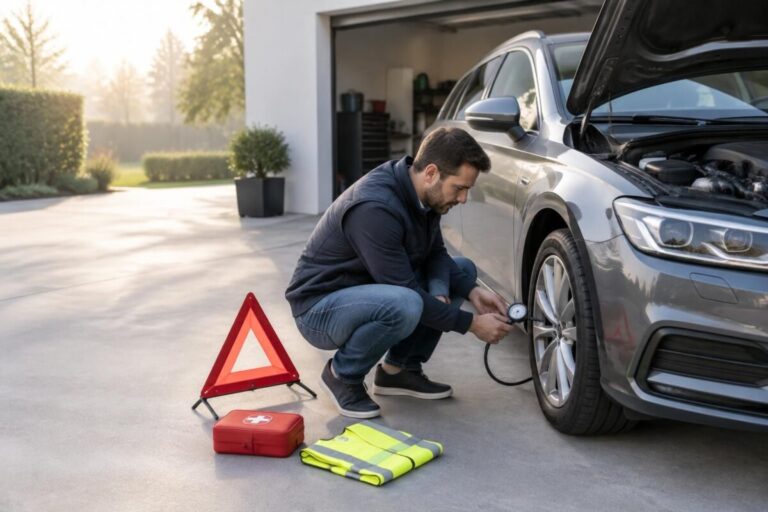
- Step 2: carry out simple checks. Once the engine is switched off and has cooled down, check the oil level according to the manual and see whether the battery terminals appear clean and securely attached. Never go under a car supported only by a jack.
- Step 3: decide whether to drive. If the noise is slight and disappears, drive carefully to a garage if necessary. If it persists, gets louder, or comes with a red warning light, do not drive; have the vehicle towed.
A professional inspection can help you avoid replacing parts at random. For a metallic noise, this guide to metallic noise when starting the engine explains the warning signs that require urgent attention.
How much should you budget for a diagnosis or repair?
As a general guide, a battery may cost around €100 to €200, and a starter motor around €150 to €400, including labor, depending on the model and circumstances. A garage diagnosis often costs around €80 to €150; ask for an estimate before any repairs.
A belt or an internal engine problem can cost more, as labor time and access to parts vary considerably. If the noise is coming from a belt, this guide to belt or pulley noise helps explain why it’s best not to wait.
Maintain your car to prevent noises when starting the engine
Check the oil level about once a month and follow the manufacturer’s recommended car maintenance intervals. Keep the battery terminals clean, too, and have the battery tested if the engine starts slowly, especially after several cold nights.
A noise that occurs after the car has been parked for a long time may have a different cause from a sound that occurs every morning. Note the circumstances and tell the garage: this information helps with diagnosis and avoids unnecessary tests.
A safe journey often starts before you turn the key: a new sound deserves attention, not to be drowned out by the radio. For more information, here’s what to check when a noise when starting the engine may be hiding a problem.
Frequently asked questions about noises when starting the engine
Can you drive with a clicking noise when starting the engine?
If the clicking is brief and the engine runs normally, have the battery checked soon. If it continues, is accompanied by vibrations, or comes with a red warning light, pull over and call for assistance.
Is a noise when starting a cold engine always serious?
No. Some brief sounds may occur when the engine is cold, but a new, persistent, or intensifying noise should be checked, especially if it comes with a warning light.
How much does an engine noise diagnosis cost?
A diagnosis often costs around €80 to €150, depending on the garage, the vehicle, and the checks required. Ask for an estimate, as prices vary depending on the circumstances.
What should you do if the engine knocks when starting?
Switch off the engine if the knocking is pronounced or persistent, check the oil warning light without continuing your journey, and contact a professional. Insufficient lubrication can cause serious damage.
Thank you for your interest; Nathan