
Car engine: 6 signs of a deep rumbling noise
- Note when it occurs: when starting, once warm, during acceleration, or at idle.
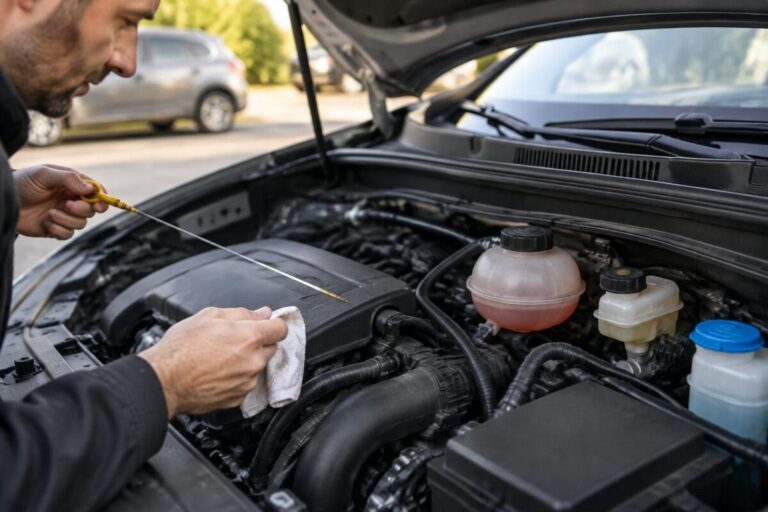
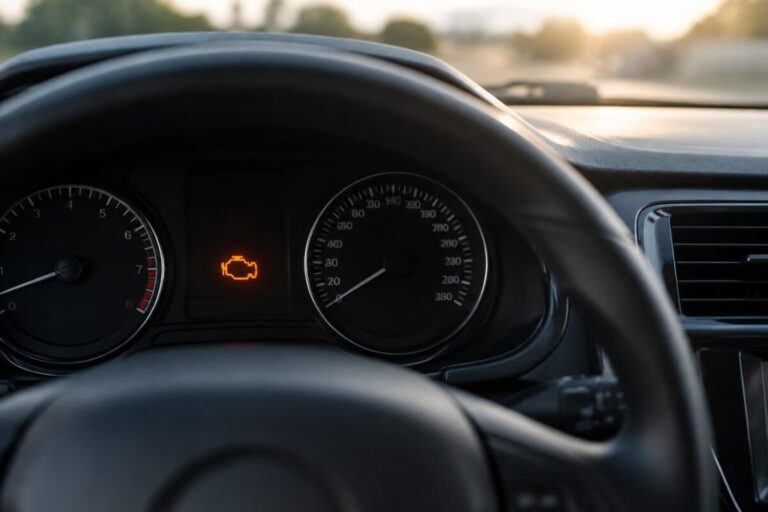
- Check the warning lights, especially the oil pressure light, and check the oil level once the engine is off and has cooled down.
- Listen for whether the noise follows engine speed or the car’s speed, without accelerating hard to test it.
- Look for related signs: loss of power, smoke, a leak, an unusual smell, or engine vibrations.
- Stop safely if the noise is a pronounced metallic knock, gets worse quickly, or occurs alongside a red warning light.
A new noise should be checked, even if it disappears after a few seconds. To compare symptoms, also see these guides on an engine noise when cold that stops and where the noise is coming from, above or below the engine.
Six clues to help understand a low-pitched engine noise
Sound must be considered in context: a rumble at low engine speed points to different parts than an engine knock that speeds up with engine speed. Here are six situations to distinguish, without replacing an inspection at a repair shop.
| Sound clue | Possible cause | What to do |
|---|---|---|
| Dull knock when starting from cold | Hydraulic lifters or internal wear | Monitor how long it lasts and have it checked if it persists |
| Metallic удар that follows acceleration | Severely worn connecting rod bearing | Switch off the engine and call for roadside assistance |
| Fast, regular ticking | Valves or timing system | Have it checked, promptly if the noise gets louder |
| Whistling during acceleration | Intake leak or turbo problem | Avoid hard acceleration and book an appointment |
| Rattling when climbing a hill or under load | Irregular combustion or fuel injection | Do not strain the engine and have it diagnosed |
| Buzzing that changes with engine speed | Idler pulley, alternator, or water pump | Have the accessories and belts checked |
1. A dull knock just after starting
A noise on startup that lasts a few seconds and then fades may come from hydraulic lifters filling with oil after the engine has been off. If it persists when the engine is warm, gets louder, or comes with an oil warning light, stop the vehicle and have it checked.
The sound alone is not enough to conclude that a connecting rod is worn. How long it lasts, where it comes from, and the state of lubrication are key factors.
2. A metallic удар that speeds up with the engine
A deep, rhythmic knock that becomes more pronounced when you accelerate may indicate a damaged connecting rod bearing. Continuing to drive risks making the damage much worse, potentially leading to engine failure.
If the knock is clear, do not take the car for a test drive. Switch off the engine as soon as you can stop safely and arrange for it to be transported on a flatbed truck.
3. A rapid ticking from the upper part of the engine
A light ticking that follows engine speed may come from valve clearance or worn or dirty lifters. A loose timing chain can also cause a rattling noise, often localized around the timing system.
A brief noise when cold is not as serious as persistent ticking that gets louder. If the engine loses power or runs unevenly, have it inspected without delay.
4. A whistle that rises during acceleration
On a turbocharged engine, a whistle that gets louder during acceleration may indicate a split hose or an air leak. Loss of power makes this more likely; an unusual metallic noise calls for a prompt inspection of the turbo.
A whistle does not always come from the engine itself. A belt or accessory pulley can also make a high-pitched sound that changes with engine speed.
5. Rattling mainly when climbing a hill or at low engine speed
Fine sounds, like tiny metal balls, can occur when the engine is under strain at low engine speed. In a gasoline car, this may be related to combustion; in a diesel, an injector or injection pressure may be to blame.
Avoid putting the engine under strain in these conditions. Shift down rather than flooring the accelerator, then have the vehicle checked if the problem returns.
6. A continuous rumble or buzzing
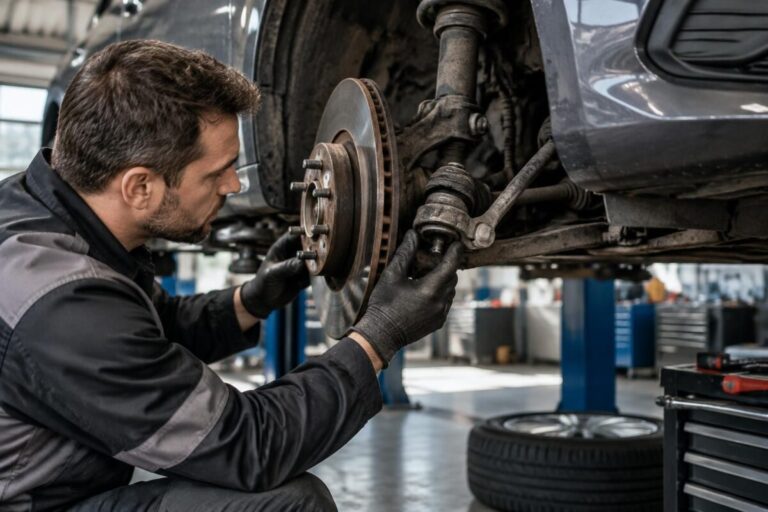
A low-pitched noise that changes with engine speed while the car is stationary may come from an accessory, such as an idler pulley, the alternator, or a pump. If it changes more with road speed, the source may be elsewhere, such as a wheel bearing or the transmission.
A faulty exhaust can also cause a rumble, sometimes accompanied by a gas smell. Worn engine mounts are more likely to cause vibrations or knocks felt inside the cabin, especially when starting or when the load changes.
How to narrow down the diagnosis in three steps
- Describe the noise. Note whether it is low-pitched, high-pitched, regular, or intermittent, and whether it occurs when cold, when warm, at idle, or during acceleration.
- Look for related signs. Check the warning lights, loss of power, vibrations, smoke, and visible leaks. Check the oil level with the engine off, following the vehicle manual.
- Choose the appropriate next step. For a light, steady noise, book an appointment soon. For a pronounced knock, a red warning light, or a sudden loss of power, switch off the engine and call for roadside assistance.
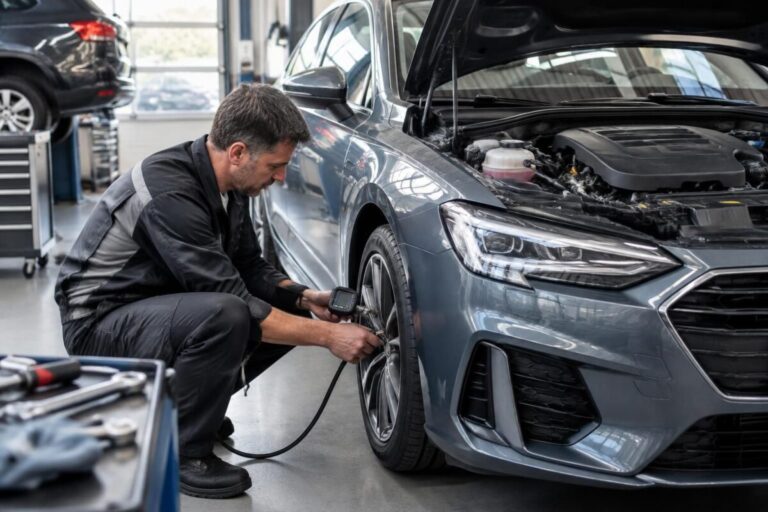
Do not remove a belt or disconnect an injector or ignition coil while the engine is running: these tests require precautions and equipment. In auto repair, listening helps guide the investigation, but inspecting the parts and reading the fault codes confirms the problem.
When an engine noise means you must stop
Three signs mean you should not continue driving: a metallic knock that gets louder with engine speed, a red oil pressure warning light accompanied by an unusual noise, or rapid knocking with a sudden loss of power.
Stop in a safe place, switch off the engine, and contact roadside assistance. Even if the noise stops afterward, that does not prove the problem has been resolved.
Frequently asked questions about low-pitched engine noises
Is a low-pitched noise on startup always a cause for concern?
No. A brief noise that quickly disappears may come from hydraulic parts building up pressure. If it persists when warm, gets louder, or comes with a warning light, have the engine checked.
How can I tell an engine noise from a bearing noise?
A noise that follows engine speed even when the car is stationary points to the engine or its accessories. A rumble that varies mainly with the car’s speed may come from a bearing or the transmission. An inspection is still needed to confirm the cause.
Can I drive with a metallic knock?
If the knock is pronounced, rhythmic, or gets worse during acceleration, stop as soon as you can do so safely and switch off the engine. Do not continue driving before the vehicle has been diagnosed.
Is the oil level enough to explain a noise?
A low oil level can contribute to poor lubrication, but a normal level does not rule out a mechanical fault. Check it with the engine off and follow the manufacturer’s instructions, then have the vehicle inspected if the noise persists.
Thanks for reading! Feel free to share your observations in the comments. — Nathan
Hi, it’s Nathan. A low-pitched engine noise can indicate a problem with a connecting rod, bearing, or engine mount: note when it occurs and stop if it gets louder.
A deep rumble alone is not enough to identify an engine fault. Engine speed, temperature, and vibrations provide essential clues to guide the diagnosis.
What to do right away
- Note when it occurs: when starting, once warm, during acceleration, or at idle.
- Check the warning lights, especially the oil pressure light, and check the oil level once the engine is off and has cooled down.
- Listen for whether the noise follows engine speed or the car’s speed, without accelerating hard to test it.
- Look for related signs: loss of power, smoke, a leak, an unusual smell, or engine vibrations.
- Stop safely if the noise is a pronounced metallic knock, gets worse quickly, or occurs alongside a red warning light.
A new noise should be checked, even if it disappears after a few seconds. To compare symptoms, also see these guides on an engine noise when cold that stops and where the noise is coming from, above or below the engine.
Six clues to help understand a low-pitched engine noise
Sound must be considered in context: a rumble at low engine speed points to different parts than an engine knock that speeds up with engine speed. Here are six situations to distinguish, without replacing an inspection at a repair shop.
| Sound clue | Possible cause | What to do |
|---|---|---|
| Dull knock when starting from cold | Hydraulic lifters or internal wear | Monitor how long it lasts and have it checked if it persists |
| Metallic удар that follows acceleration | Severely worn connecting rod bearing | Switch off the engine and call for roadside assistance |
| Fast, regular ticking | Valves or timing system | Have it checked, promptly if the noise gets louder |
| Whistling during acceleration | Intake leak or turbo problem | Avoid hard acceleration and book an appointment |
| Rattling when climbing a hill or under load | Irregular combustion or fuel injection | Do not strain the engine and have it diagnosed |
| Buzzing that changes with engine speed | Idler pulley, alternator, or water pump | Have the accessories and belts checked |
1. A dull knock just after starting
A noise on startup that lasts a few seconds and then fades may come from hydraulic lifters filling with oil after the engine has been off. If it persists when the engine is warm, gets louder, or comes with an oil warning light, stop the vehicle and have it checked.
The sound alone is not enough to conclude that a connecting rod is worn. How long it lasts, where it comes from, and the state of lubrication are key factors.
2. A metallic удар that speeds up with the engine
A deep, rhythmic knock that becomes more pronounced when you accelerate may indicate a damaged connecting rod bearing. Continuing to drive risks making the damage much worse, potentially leading to engine failure.
If the knock is clear, do not take the car for a test drive. Switch off the engine as soon as you can stop safely and arrange for it to be transported on a flatbed truck.
3. A rapid ticking from the upper part of the engine
A light ticking that follows engine speed may come from valve clearance or worn or dirty lifters. A loose timing chain can also cause a rattling noise, often localized around the timing system.
A brief noise when cold is not as serious as persistent ticking that gets louder. If the engine loses power or runs unevenly, have it inspected without delay.
4. A whistle that rises during acceleration
On a turbocharged engine, a whistle that gets louder during acceleration may indicate a split hose or an air leak. Loss of power makes this more likely; an unusual metallic noise calls for a prompt inspection of the turbo.
A whistle does not always come from the engine itself. A belt or accessory pulley can also make a high-pitched sound that changes with engine speed.
5. Rattling mainly when climbing a hill or at low engine speed
Fine sounds, like tiny metal balls, can occur when the engine is under strain at low engine speed. In a gasoline car, this may be related to combustion; in a diesel, an injector or injection pressure may be to blame.
Avoid putting the engine under strain in these conditions. Shift down rather than flooring the accelerator, then have the vehicle checked if the problem returns.
6. A continuous rumble or buzzing
A low-pitched noise that changes with engine speed while the car is stationary may come from an accessory, such as an idler pulley, the alternator, or a pump. If it changes more with road speed, the source may be elsewhere, such as a wheel bearing or the transmission.
A faulty exhaust can also cause a rumble, sometimes accompanied by a gas smell. Worn engine mounts are more likely to cause vibrations or knocks felt inside the cabin, especially when starting or when the load changes.
How to narrow down the diagnosis in three steps
- Describe the noise. Note whether it is low-pitched, high-pitched, regular, or intermittent, and whether it occurs when cold, when warm, at idle, or during acceleration.
- Look for related signs. Check the warning lights, loss of power, vibrations, smoke, and visible leaks. Check the oil level with the engine off, following the vehicle manual.
- Choose the appropriate next step. For a light, steady noise, book an appointment soon. For a pronounced knock, a red warning light, or a sudden loss of power, switch off the engine and call for roadside assistance.
Do not remove a belt or disconnect an injector or ignition coil while the engine is running: these tests require precautions and equipment. In auto repair, listening helps guide the investigation, but inspecting the parts and reading the fault codes confirms the problem.
When an engine noise means you must stop
Three signs mean you should not continue driving: a metallic knock that gets louder with engine speed, a red oil pressure warning light accompanied by an unusual noise, or rapid knocking with a sudden loss of power.
Stop in a safe place, switch off the engine, and contact roadside assistance. Even if the noise stops afterward, that does not prove the problem has been resolved.
Frequently asked questions about low-pitched engine noises
Is a low-pitched noise on startup always a cause for concern?
No. A brief noise that quickly disappears may come from hydraulic parts building up pressure. If it persists when warm, gets louder, or comes with a warning light, have the engine checked.
How can I tell an engine noise from a bearing noise?
A noise that follows engine speed even when the car is stationary points to the engine or its accessories. A rumble that varies mainly with the car’s speed may come from a bearing or the transmission. An inspection is still needed to confirm the cause.
Can I drive with a metallic knock?
If the knock is pronounced, rhythmic, or gets worse during acceleration, stop as soon as you can do so safely and switch off the engine. Do not continue driving before the vehicle has been diagnosed.
Is the oil level enough to explain a noise?
A low oil level can contribute to poor lubrication, but a normal level does not rule out a mechanical fault. Check it with the engine off and follow the manufacturer’s instructions, then have the vehicle inspected if the noise persists.
Thanks for reading! Feel free to share your observations in the comments. — Nathan