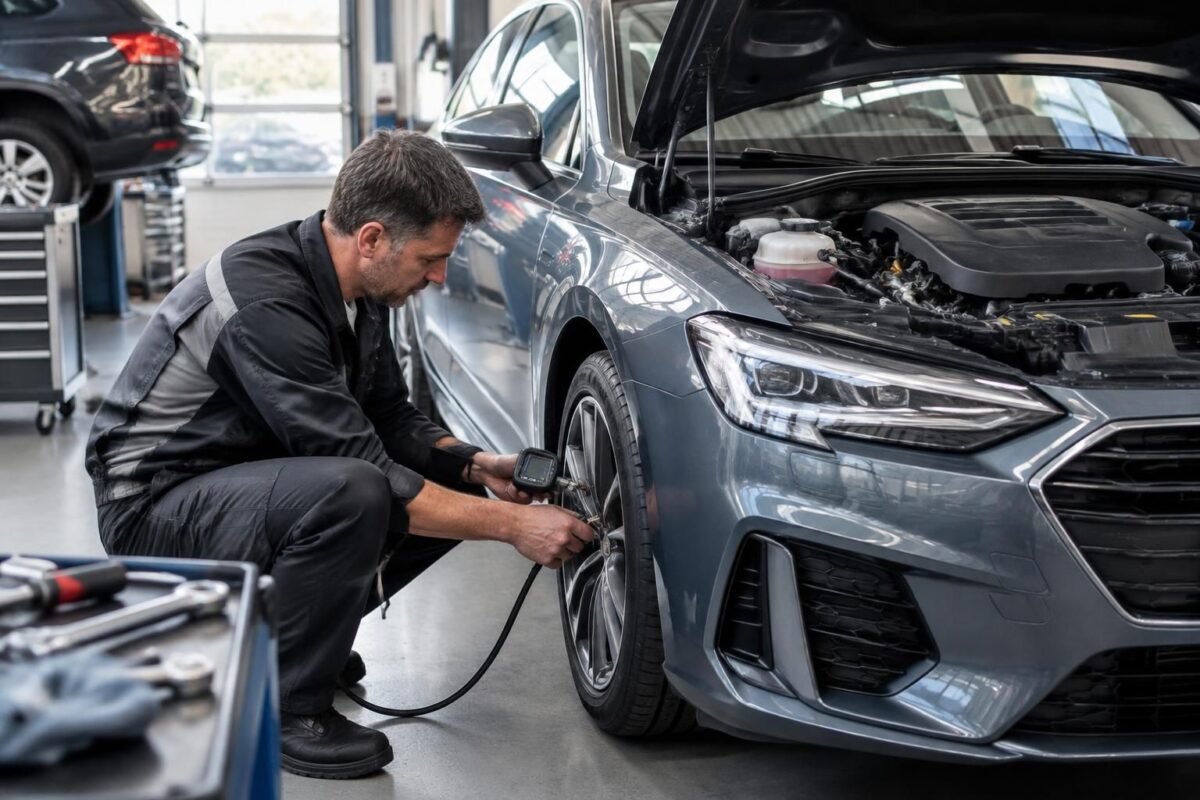
Car Engine: Loss of Acceleration or Tire Pressure
Hi, Nathan here. If your car suddenly loses acceleration, check the tire pressure first, but a significant loss of power often comes from the engine. Underinflation increases rolling resistance and can make acceleration feel sluggish, but on its own it cannot explain jerking or a major drop in power. Check all four tires before looking further.
WHAT TO DO NOW
- Park somewhere safe and check whether a tire looks flat or damaged.
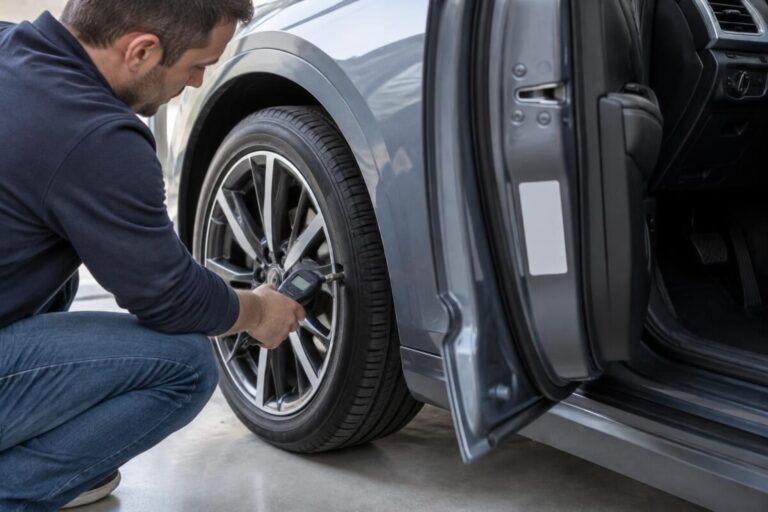
- Measure the pressure in all four tires when they are cold, using a pressure gauge.
- Compare the readings with the label on the door jamb or in the vehicle manual.
- If a tire is underinflated, inflate it to the recommended pressure, then check whether the pressure drops again.
- If the loss of acceleration persists, note the symptoms and have the engine diagnosed.
Loss of acceleration or tire pressure: how to tell the difference
Incorrect tire pressure can make a car feel less responsive, especially if several tires are underinflated. Rolling resistance increases, and fuel consumption may also rise. But a sudden or significant drop in engine power points more toward a mechanical or electronic fault.
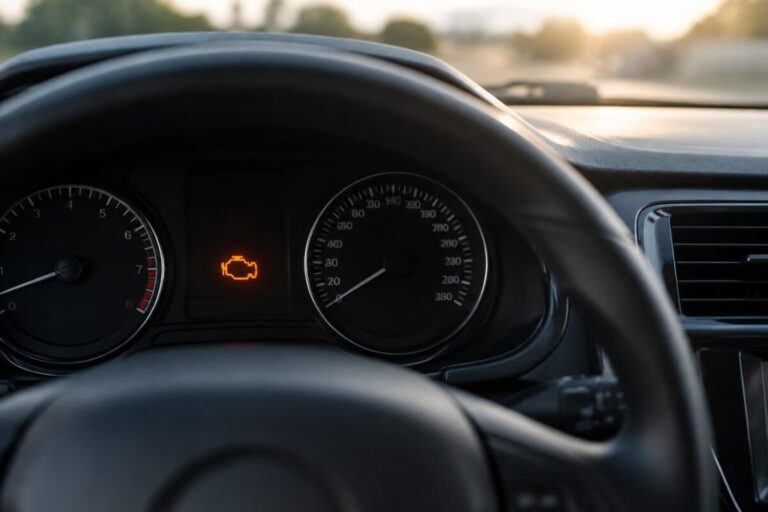
Pay attention to what happens when you accelerate. Misfiring, jerking, difficulty starting, or an engine warning light are not usually caused by the tires. To better understand these signs, also see the information about an engine that shakes uphill.
If the car drives normally but feels less smooth, start by checking the tire pressure and condition. If it struggles noticeably uphill or accelerates with jerks, do not just inflate the tires: a clogged filter, an injection problem, a turbo issue, or an EGR valve fault could be to blame.
How tire pressure affects the way your car drives
Underinflation causes the tire to deform more and increases its contact with the road. The car may feel less responsive, while the tires get hotter and wear unevenly. Overinflation, on the other hand, can reduce tire grip and make the ride harsher.
The correct pressure depends on the vehicle, tire size, and load. Do not rely on a universal value or the number printed on the tire sidewall: it does not replace the manufacturer’s recommendations.
Tire pressure warning light or loss of power: signs to compare
| What you notice | Possible cause | Useful action |
|---|---|---|
| TPMS warning light on, car drives almost normally | Low pressure, temperature change, or sensor issue | Measure the pressure in all four tires soon |
| A tire looks flat or keeps losing air | Slow puncture, valve issue, or wheel damage | Inflate it only to reach a safe place, then have the tire checked |
| Weak acceleration with jerking or misfiring | Fuel injection, ignition, turbo, or exhaust fault | Have the fault codes read and the engine inspected |
| Pressure is correct, warning light still on | TPMS not reset or system fault | Check the vehicle procedure or visit a repair shop |
The TPMS warns you of a problem, but does not replace a pressure gauge reading. The warning threshold and how the light works vary by vehicle, so a persistent warning should be checked even if the tires look normal.
Two situations to help you decide quickly
If the tire pressure warning light is on but the car feels stable, drive slowly to a place where you can measure and correct the pressure. Avoid long trips until you have checked the tires.
If the car loses a lot of acceleration or becomes unstable, pull over as soon as you can do so safely. A severely underinflated tire, an unusual smell, smoke, or an engine warning light accompanied by misfiring warrants a prompt inspection rather than continuing your journey.
3-step process to find the cause
- Step 1 — Check the tires. Measure the pressure when the tires are cold, on all four wheels, and compare each reading with the vehicle label. Inspect the sidewalls and tread without removing anything embedded in the tire.
- Step 2 — Observe how the engine behaves. Note whether the loss of power occurs when the engine is cold, uphill, or every time you accelerate. Keep track of jerking, stalling, warning lights, and any increase in fuel consumption.
- Step 3 — Have it diagnosed if the problem continues. A fault-code reader can help guide the investigation, but the codes need to be interpreted alongside the symptoms. An accurate diagnosis avoids replacing parts at random; here’s why a wrong car diagnosis wastes time.
A common mistake: resetting the TPMS as soon as the warning light comes on without checking the pressure. Resetting it does not fix a leak or an underinflated tire; it is only done after correcting the problem, following the procedure specified for that model.
When the loss of acceleration comes from the engine
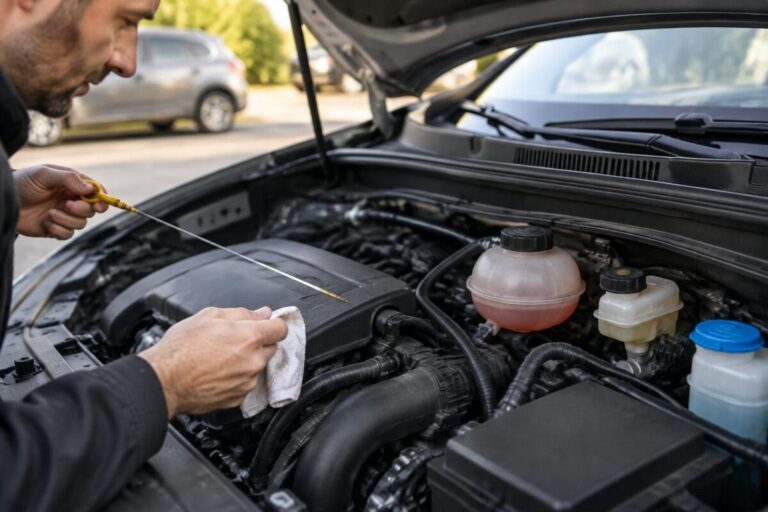
If the tires are properly inflated and the car still feels sluggish, several components may be limiting its power. A clogged air or fuel filter, malfunctioning injectors, a faulty turbo, or a stuck EGR valve are common possibilities. On a diesel, a clogged particulate filter can also impede the flow of exhaust gases.
The engine warning light is not always on. Hesitant acceleration, unusual smoke, or stalling are still useful clues to report to the repair shop. An electronic check, combined with a mechanical inspection, helps pinpoint the cause before any repairs are made.
To reduce the risk of a breakdown, follow the car maintenance schedule and replace filters as recommended. Regularly checking fluid levels, tire pressure, and the overall condition of the tires is simple, but these steps help you distinguish a rolling-resistance issue from a genuine engine fault.
Frequently asked questions about loss of acceleration and tire pressure
Can low tire pressure cause a loss of acceleration?
Yes, underinflation increases rolling resistance and can make the car less responsive. However, a sudden loss of power or one accompanied by misfiring calls for an engine diagnosis.
What should I do if the tire pressure warning light comes on even though the tires look normal?
Measure all four tires when they are cold and compare the readings with the manufacturer’s specifications. If the pressure is correct but the warning light stays on, the TPMS may need to be reset or checked.
Can I reset the TPMS without inflating the tires?
No, not before checking and correcting the pressure. Resetting the system does not fix a leak or incorrect inflation; it restores the system’s reference settings after the tires have been checked.
When should I stop driving?
Pull over as soon as it is safe to do so if a tire is severely deflated, the car becomes unstable, or the loss of power is accompanied by smoke, severe misfiring, or a critical warning light.
Thanks for your interest; Nathan